Cheese Caves in Minecraft: How to Find Them (26.3)
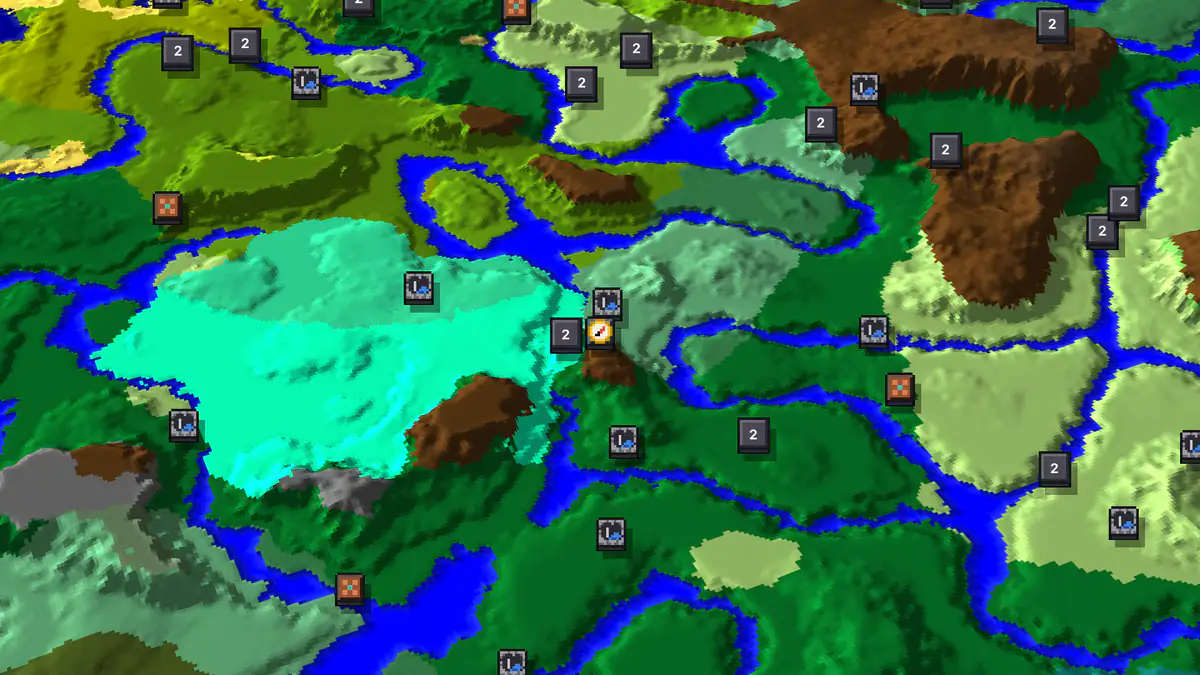
JavaA cheese cave is the biggest cave type in Minecraft 1.18 and newer: a huge open room carved by 3D noise, often hundreds of blocks across with stone pillars from floor to ceiling, and the Cave Finder shows every one in your seed. Since 1.18 the underground is mostly empty space, if you know where to look. We had the engine map every big cavern within about 1,000 blocks of spawn on five seeds. Found 288 of them, the biggest holding 2.4 million blocks of air. Here's how cheese caves differ from spaghetti and noodle caves, where the big ones sit, and why we barely strip mine anymore.
Updated · 6 min read · Java up to 26.3
The three noise caves
Before 1.18, caves were all carved tunnels: worm-like paths that wound around under the surface. The Caves & Cliffs update kept those (and ravines), but added a whole new system on top of them where the cave shape comes straight out of 3D noise. That's where the three food names come from.
- Cheese caves are the giant ones. Huge open rooms, often hundreds of blocks across, with stone pillars running floor to ceiling. Named after the holes in Swiss cheese, and the reason you sometimes break through a wall and just see darkness for ages.
- Spaghetti caves are long, fairly thin tunnels that snake for a long way and connect everything else together. Good for walking, bad for getting lost in.
- Noodle caves are the very thin, twisty ones. Often just one or two blocks wide. You'll mostly notice them as weird little cracks crossing your tunnel.
Only cheese caves are big enough to be worth planning around, so that's what the Cave Finder marks. Spaghetti and noodle caves are everywhere; you'll run into them without trying. Ravines are their own thing and have their own guide.
How many big caves are near spawn
We ran the cave finder's engine over a 2,048 block square centred on spawn for five seeds on Java 26.3, then merged markers that pointed at the same cavern. That left 288 cheese caves, between 45 and 68 per seed. Every single one holds at least about 150,000 blocks of open space, which is already more than most player bases.
| Seed | Caves | Biggest one | Its open space |
|---|---|---|---|
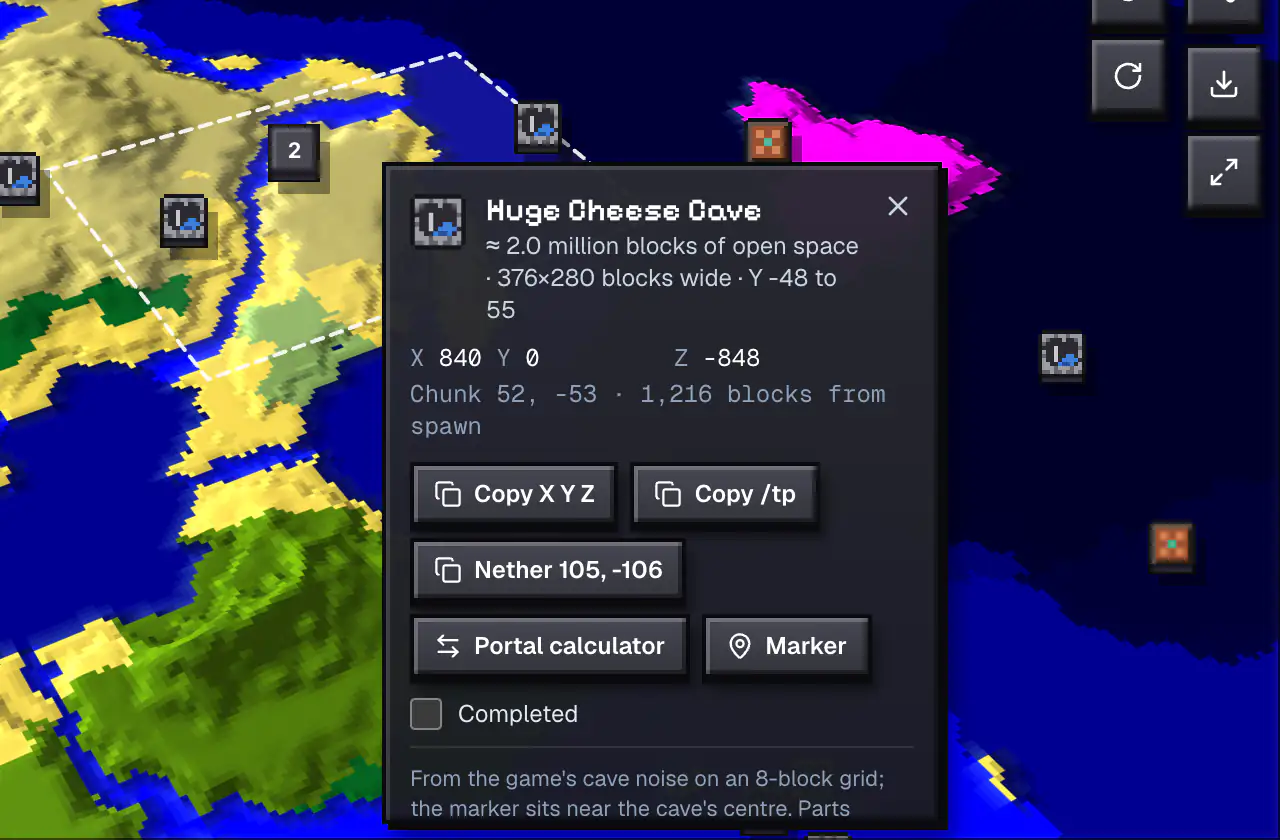
| 0 | 61 | 840, 0, −848 | 1.95 million blocks |
| 123456789 | 45 | −152, 24, −824 | 2.25 million blocks |
| 8675309123456789 | 63 | 960, −16, −440 | 1.22 million blocks |
| chunkscout | 68 | 288, 0, −184 | 1.39 million blocks |
| -1234567890123 | 51 | 640, 8, −112 | 2.41 million blocks |
The finder sorts them into four sizes. Of our 288: 142 small, 81 medium, 52 large and 13 huge. So roughly one in five is large or bigger, and you get a couple of huge ones per seed in that area. The median cave held about 368,000 blocks of air.
How wide is that? The median cave stretched about 216 blocks across at its widest, and the biggest one, on seed -1234567890123, covers a box of 408 × 504 blocks and runs from Y −48 all the way up to Y 71. You could fit a decent village in it.
How deep they sit
Cheese caves cluster around the middle of the stone layer. Across all 327 cave markers (before merging duplicates), the centre point broke down like this:
| Centre Y | Markers | Share |
|---|---|---|
| 32 and up | 69 | 21% |
| 0 to 31 | 118 | 36% |
| −32 to −1 | 119 | 36% |
| Below −32 | 21 | 6% |
Median centre: Y 0. That's the deepslate line, so the floor of a typical big cave is deepslate and the ceiling is stone. The big ones reach a long way though. 54 of the 65 large and huge caves in our list reach from Y −40 or lower up to Y 40 or higher, which means one cave can show you iron and copper near its roof and redstone and diamond near its floor.
Caving vs strip mining
Honest opinion: in 1.18+ worlds we cave first and strip mine second. A big cheese cave shows you hundreds of exposed ore faces with no digging at all. Walk the walls with a torch stack and you'll fill a shulker with coal, iron and copper before a strip mine would have found its first vein.
The catch is diamonds. Diamond ore that would touch air has a good chance of not being placed at all, so the walls of a cave are actually worse for diamonds than solid rock. Our diamond mining guide has the numbers on that. What we do: explore the cave for everything else, then branch mine at diamond level off its floor. You start your tunnels deep without spending ages getting there.
- Light it as you go. Big caves spawn a lot of mobs and they come from every direction, including above.
- Leave a trail. Torches on one side of the wall only, always the same side, tells you the way out.
- Respect the drops. A cheese cave floor can be 30+ blocks below the ledge you came in on.
Finding a big one near you
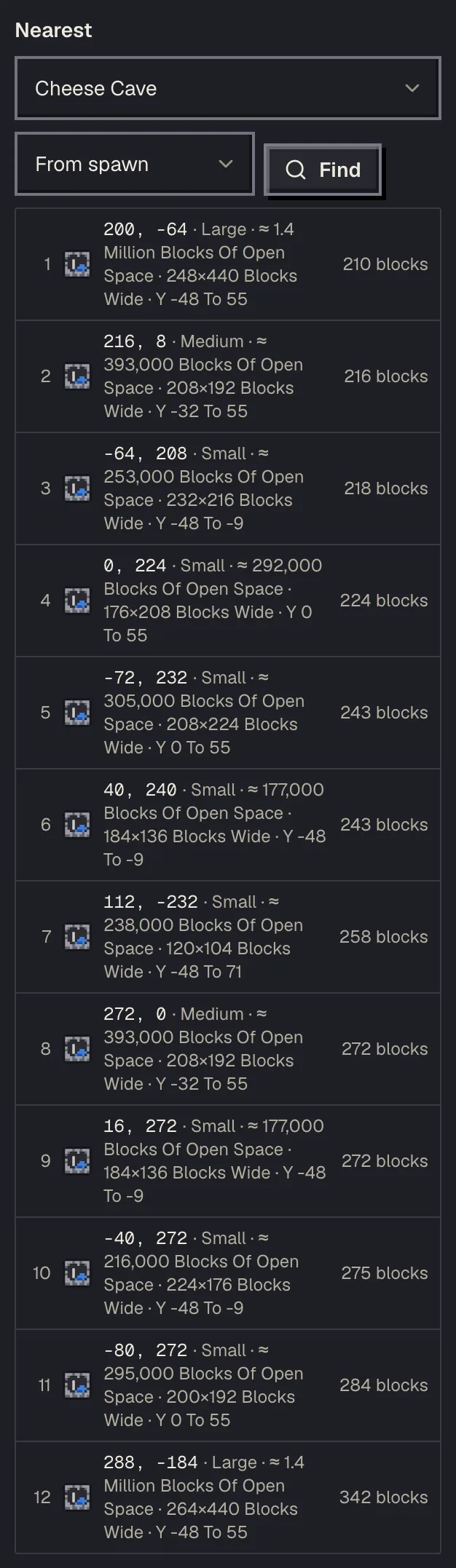
Some seeds put a cavern right under your feet. On -1234567890123 a large cave of about 971,000 blocks sits next to spawn, with its marker at −64, 8, 40, just 54 blocks away. On chunkscout the nearest is also large: 1.38 million blocks around 200, −24, −64, 210 blocks from spawn under a snowy taiga. Seed 0 makes you work harder: its closest cave is a small one at −160, 24, 200, 237 blocks out.
- Open the Cave Finder, type your seed and pick a Java version from 1.18 up.
- Look at the Nearest list in the side panel. It sorts caves by distance from spawn, or from any X and Z you type.
- Click one. The popup gives the size class, the Y of its centre, how far it reaches up and down, and a
/tpfor creative scouting. - Dig a staircase down to the Y the popup shows. Stop every few blocks near the end: you're about to break into a big open room.
One more thing worth knowing: a lot of these big caverns have a cave biome inside. Of the 288 caves, 60 had their centre in dripstone caves and 21 in lush caves. If you want a specific one, check the dripstone and lush cave guides for how to pick it out.
Questions
What is a cheese cave in Minecraft?
The biggest kind of cave since 1.18: a huge open room shaped by 3D noise, often with stone pillars. On our five test seeds the median one held about 368,000 blocks of air and was around 216 blocks wide.
What's the difference between spaghetti and noodle caves?
Spaghetti caves are long tunnels a few blocks wide that connect areas together. Noodle caves are much thinner, often only one or two blocks wide, and twist around a lot.
What Y level are big caves at?
The centre is usually around Y 0. In our sample 72% of cave centres were between Y −32 and Y 31, and 54 of the 65 large and huge ones reach from Y −40 or lower to Y 40 or higher.
How many big caves are there near spawn?
Between 45 and 68 cheese caves in a 2,048 block square around spawn on the five seeds we checked. Roughly one in five was large or huge.
Does the cave finder work on Bedrock?
No. It reads Java's cave noise only, so it's Java Edition 1.18 and newer.
Related guides
Finders and tools in this guide
- Cave FinderJavaHuge cheese caves underground, sized and with the depth to dig to — mining, bases and caving.
- Ravine FinderJavaEvery ravine with its path, width and depth, and whether it opens to the surface.
- Diamond FinderJavaEvery diamond in your Java seed with exact X Y Z, vein size and cave exposure.
Written by the Minecraft Tools team from the same world-generation engine that runs the seed map. Coordinates quoted here were computed with it for the stated seed, edition and version, and the engine is tested against the real game.