Planning a Slime Farm From the Seed
JavaBedrockSlime farms fail for one reason more than any other: the chunk was never a slime chunk. The seed map shows every slime chunk for Java and Bedrock, and the slime seed finder searches for the best cluster near a chosen spot, so the farm is right before the first block is broken.
Updated · 6 min read · Java & Bedrock up to 26.3
What a slime chunk is
Slimes spawn underground only in slime chunks, about one chunk in ten, chosen by a formula, not by terrain. On Java the formula mixes the world seed with the chunk coordinates and feeds the result to the game's random number generator; the chunk qualifies when the first draw out of ten is zero. Change the seed and every slime chunk moves. On Bedrock the formula ignores the seed entirely and uses only the chunk coordinates, so all Bedrock worlds share one fixed slime chunk pattern.
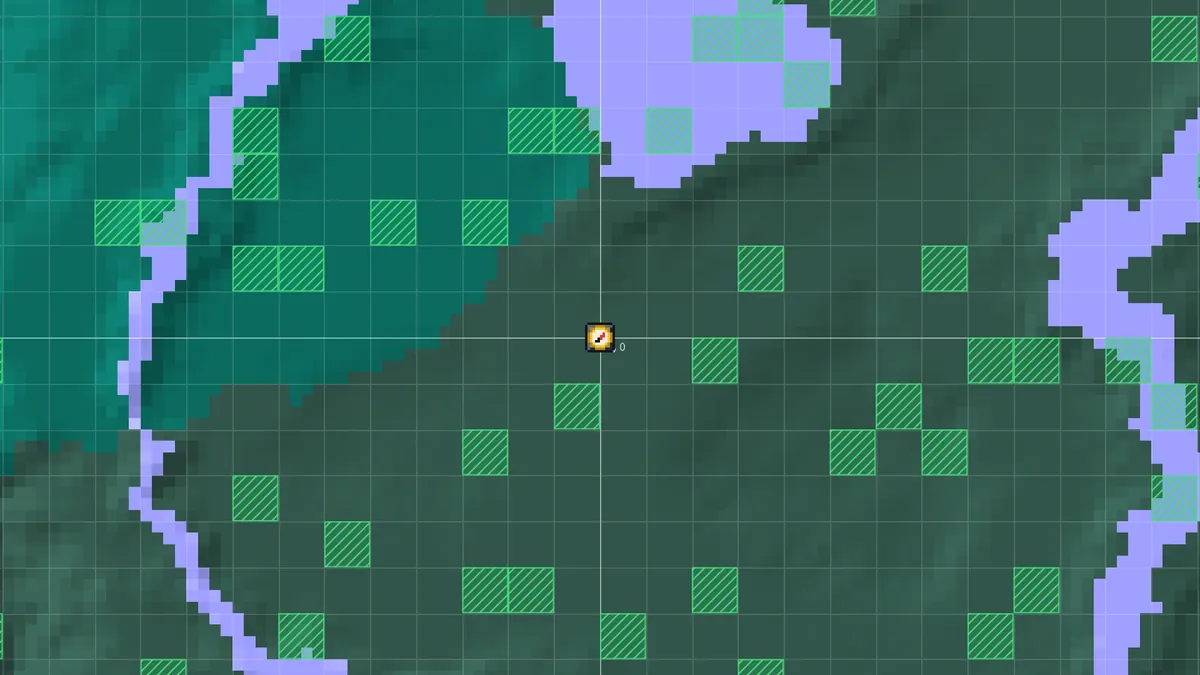
The slime chunk finder hatches every slime chunk in green for the chosen edition, and the slime chunk page has a single-chunk checker and the formula itself. Both were verified: the Java formula against an independent implementation of the game's generator on 500 chunks per test world, the Bedrock one against the known Mersenne Twister outputs.
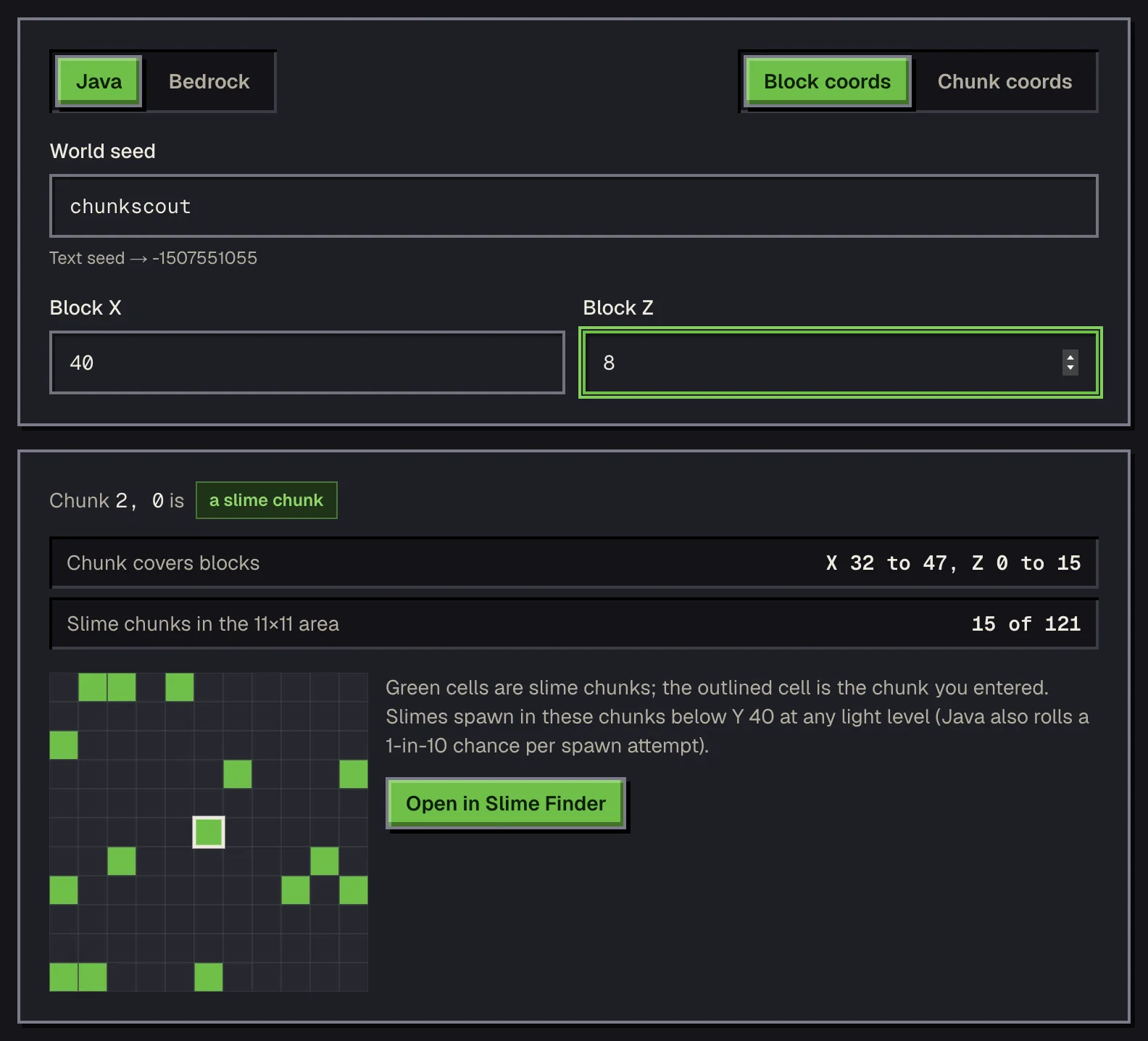
Densities vary more than you might think. In the 17×17 chunks around spawn, seed 123456789 has 20 slime chunks on Java, seed -1234567890123 has 27, seed 8675309123456789 has 32 and the text seed chunkscout has 34, nearly twice the first. The same window on Bedrock has 27 for every seed.
Spawning rules that decide the design
- Height: slimes spawn in slime chunks at Y 39 and below. Deeper is not better for the rules, but the lower you build, the fewer caves are above the farm to compete for the mob cap.
- Light: on Java, slime chunk spawning ignores light level, so the farm can be lit for safety. Light still stops zombies and skeletons from taking the cap.
- Space: a slime needs an air box matching its size; big slimes are just over two blocks tall and wide, so floors need three blocks of headroom and open floor area.
- Chance: on Java each spawn attempt in a slime chunk passes only one time in ten, so rates come from many spawnable blocks, not from a single perfect chunk.
- Distance: mobs spawn 24 or more blocks from the player and despawn beyond 128. AFK at 24 to 32 blocks from the farm's floors, with the rest of the 128-block sphere lit or filled.
- Peaceful: slimes never spawn on Peaceful difficulty, on either edition.
Swamps are a separate mechanic: slimes spawn on the surface of swamp and mangrove swamp biomes between Y 51 and 69 at light 7 or lower, with a chance that follows the moon phase. A swamp farm needs no slime chunk and produces nothing on a new moon; a slime chunk farm runs every night of the month.
Choosing the chunks
Open your seed on the slime finder, zoom in until chunk outlines appear and look for two or more hatched chunks touching. A single 16×16 chunk gives a modest farm; a 2×2 block of slime chunks gives a 32×32 floor per layer and four times the output for almost the same effort. The Grid layer and the coordinate readout give each chunk's block range; note the corners before you go underground.
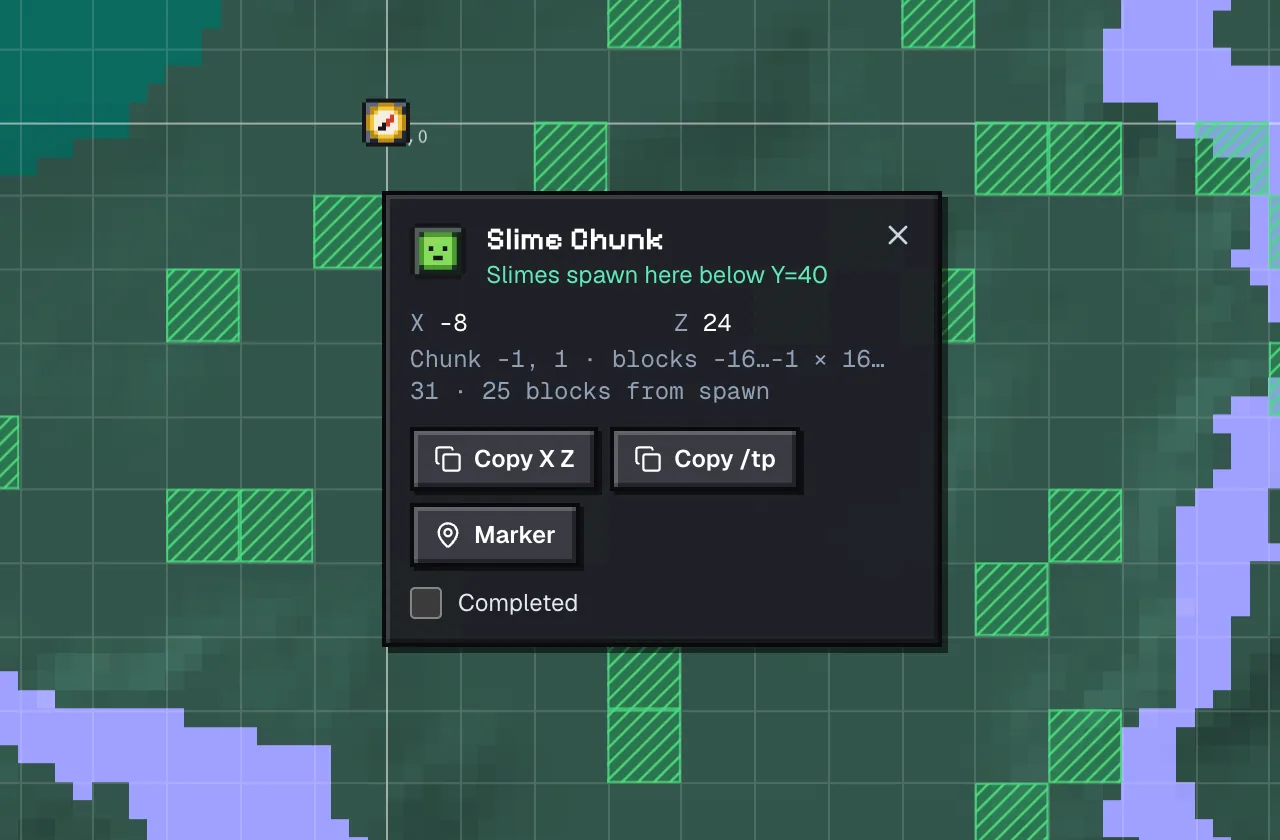
Then check what is above and around. A farm under an ocean or a river has water instead of caves overhead, which is ideal; a farm under a mountain has hundreds of caves to light. Use the cave finder on Java to see large caverns within 128 blocks and either avoid them or plan to light them. Finally, measure the distance to your base: slimes only spawn while you are within 128 blocks, so a farm under the base runs while you work above it.
Seed chunkscout slime chunksJava 26.3 · 34 slime chunks in the 17×17 chunks around spawn, with several touching pairsA layout that works
- Dig out the whole slime chunk, or the 2×2 block, from Y 39 downward in layers three blocks tall. Three to six layers is plenty; each extra layer adds spawning floor.
- Leave the floors as solid blocks and keep them flat. Slimes spawn on any solid block, so the floor material does not matter.
- Push slimes off the floors with water streams, or let iron golems draw them, into a central drop onto magma blocks, campfires or a trap of your choice. Small slimes die to a single magma block.
- Light every cave and tunnel within 128 blocks of your AFK spot, or fill them. Other mobs taking the cap is the second most common reason a farm underperforms.
- Stand 24 to 32 blocks from the nearest floor, ideally directly above the farm, and let it run.
A well-built 2×2 farm on Java yields several stacks of slimeballs an hour, enough for sticky pistons, leads and slime blocks for flying machines without ever visiting a swamp.
New world? Search for the seed
If you have not created the world yet, the slime seed finder searches Java seeds for the most slime chunks within a radius around a chosen spot, or for an exact pattern such as a 2×2 or 3×3 square of slime chunks at specific chunk coordinates. It tests millions of seeds a second on your own device, because slime chunks need no terrain, and every result opens on the map.

Combine it with the general seed finder if you also want a village or a stronghold nearby: find a village seed first, then check its slime chunks, or run the slime search and accept whatever village distance comes with it. The slime search is the stricter condition, so start there.
Bedrock differences
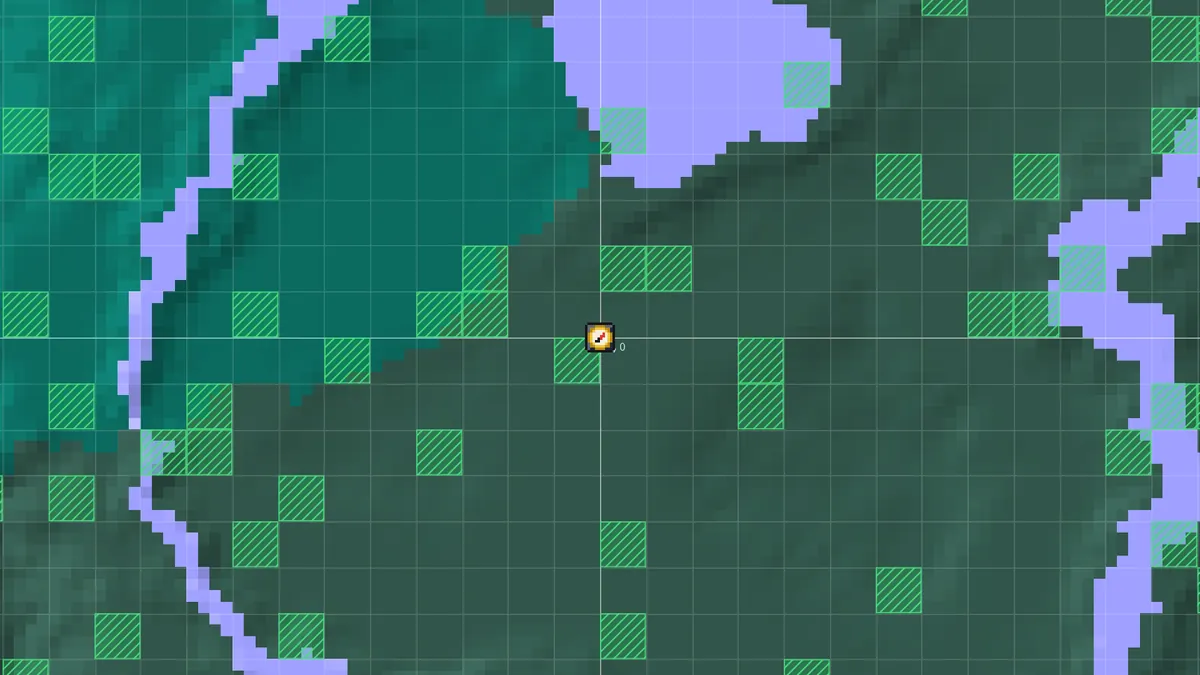
On Bedrock the finder needs no seed: every world has the same slime chunks, so a Bedrock slime chunk list from any source is valid in your world, and a Java list is never valid. The farm itself works the same way, with floors below Y 40 inside the hatched chunks. Bedrock's spawning rules differ in detail from Java's, including how light and mob caps are handled, so copy a Bedrock design, not a Java one, and expect somewhat different rates.
Questions
Why do no slimes spawn in my slime chunk?
Check that the floor is at Y 39 or below, that the chunk is really a slime chunk for your edition and seed, that difficulty is not Peaceful, that you stand 24 to 128 blocks away, and that nearby caves are lit. On Java only one spawn attempt in ten succeeds, so a small farm is slow.
Do I need darkness for a slime farm?
No. In slime chunks slimes spawn at any light level on Java, so light the farm to keep other mobs out and the mob cap free.
Are slime chunks the same on Java and Bedrock?
No. Java derives them from the seed; Bedrock uses only chunk coordinates, so every Bedrock world has the same pattern. Choose the edition on the finder.
How many slime chunks are near spawn?
About one in ten chunks, but it varies: our test seeds had between 20 and 34 in the 17×17 chunks around spawn. Clusters of two to four touching chunks are common enough to find within a few hundred blocks.
Can I find a seed with a 2×2 of slime chunks at spawn?
Yes. The slime seed finder searches Java seeds for an exact slime-chunk pattern at chosen chunk coordinates, or for the most slime chunks within a radius.
Related guides
Finders and tools in this guide
- Slime FinderHighlight slime chunks for Java and Bedrock — build the perfect slime farm.
- Seed MapInteractive biome map with every structure, slime chunk and spawn point on one canvas.
- Slime Chunks ExplainedHow slime chunks work on Java vs Bedrock, and how to farm them.
- Coordinate CalculatorConvert between block, chunk and region coordinates, and measure distance.
Written by the Minecraft Tools team from the same world-generation engine that runs the seed map. Coordinates quoted here were computed with it for the stated seed, edition and version, and the engine is tested against the real game.