Choosing a Base Location From the Seed Map
JavaBedrockA base site is a set of distances: to a village, to the portal's Nether neighbours, to the slime chunks under the floor and the monument down the coast. The seed map shows all of them at once, and the spot with the best numbers beats the first flat field you happen to find.
Updated · 6 min read · Java & Bedrock up to 26.3
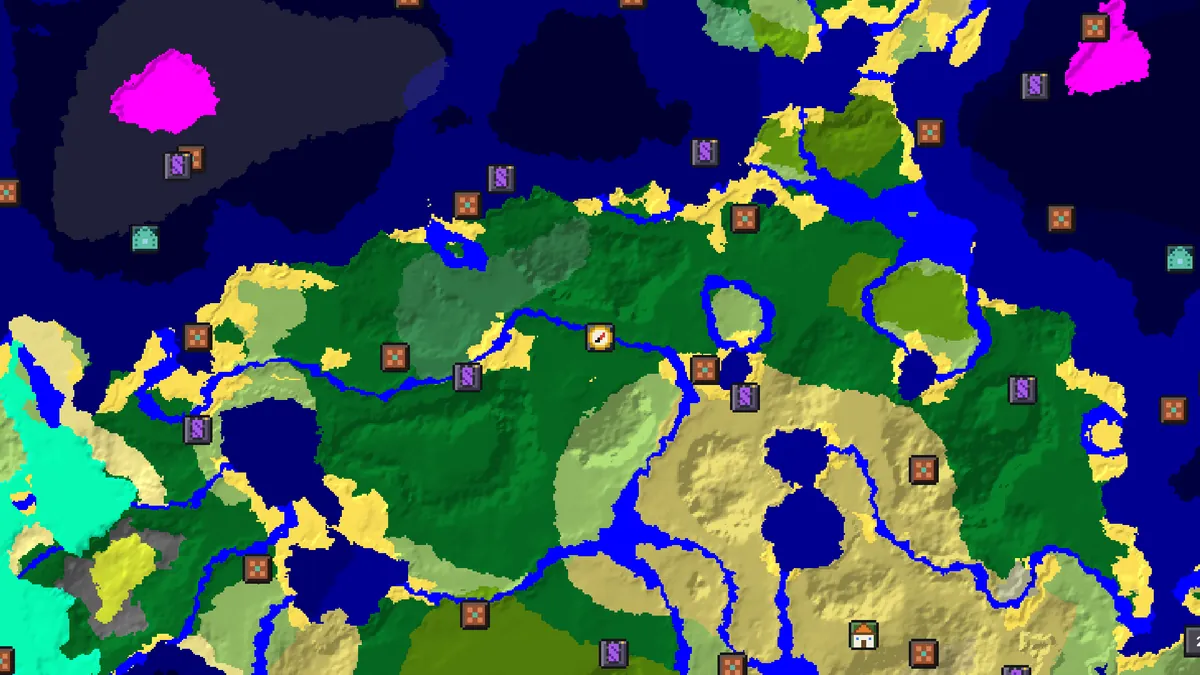
Start from the biome and the terrain
The biome sets the mood and the mobs. Plains and meadows are flat and friendly, forests give wood but spawn mobs under the canopy, deserts have no rain but no trees, snowy biomes freeze your water. The biome finder draws every biome around spawn and the Highlight biome option isolates the one you want; the shape of a cherry grove or a meadow is visible before you walk there.
Terrain shading on the map shows how flat an area is at a glance; a river or ocean edge nearby gives you a boat route, water for farms and a sea for a monument later. Mountains next door mean emeralds, iron at height and, since 1.18, the deep dark somewhere underneath. A base on the boundary between two or three biomes gets the best of each within a few hundred blocks.
Count the structures within reach
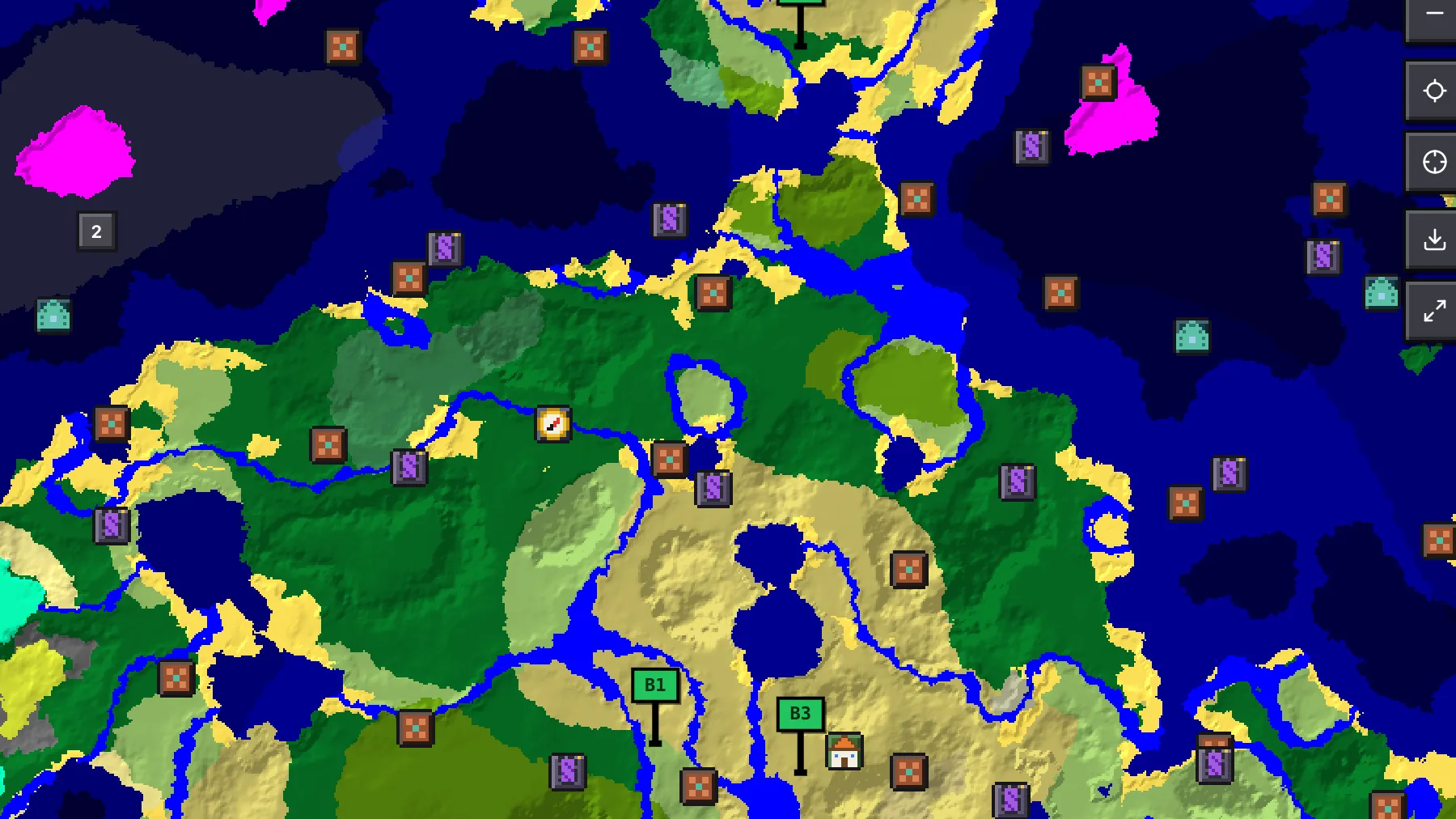
Switch on the structures you care about and read the Nearest list from your candidate spot rather than from spawn. For most bases the list is short: a village for trades, trial chambers for emeralds and keys, a ruined portal for obsidian, and whatever you plan to farm. Seed 8675309123456789 shows what a dense site looks like: from its spawn at 0, 0, trail ruins are 58 blocks away, trial chambers 115, an ancient city 250, buried treasure 151 and a jungle temple 557.
Seed 8675309123456789 around spawnJava 26.3 · five structures within 600 blocks of a sparse jungle spawnDangerous neighbours count too. A pillager outpost within a few hundred blocks sends patrols; a witch hut in the swamp next door is a farm opportunity or a nuisance depending on your plans. Seed chunkscout has an outpost at 256, -448, closer than any village, which argues for a base east or south of spawn rather than north.
Look underneath: slime chunks, caves, ores
A base over a pair of slime chunks gets a slime farm that runs while you build upstairs. The slime finder shows the chunks, and because Java slime chunks follow the seed, it is worth shifting a base 50 blocks to put the workshop over one. On Bedrock the pattern is the same in every world, so this check is even quicker.
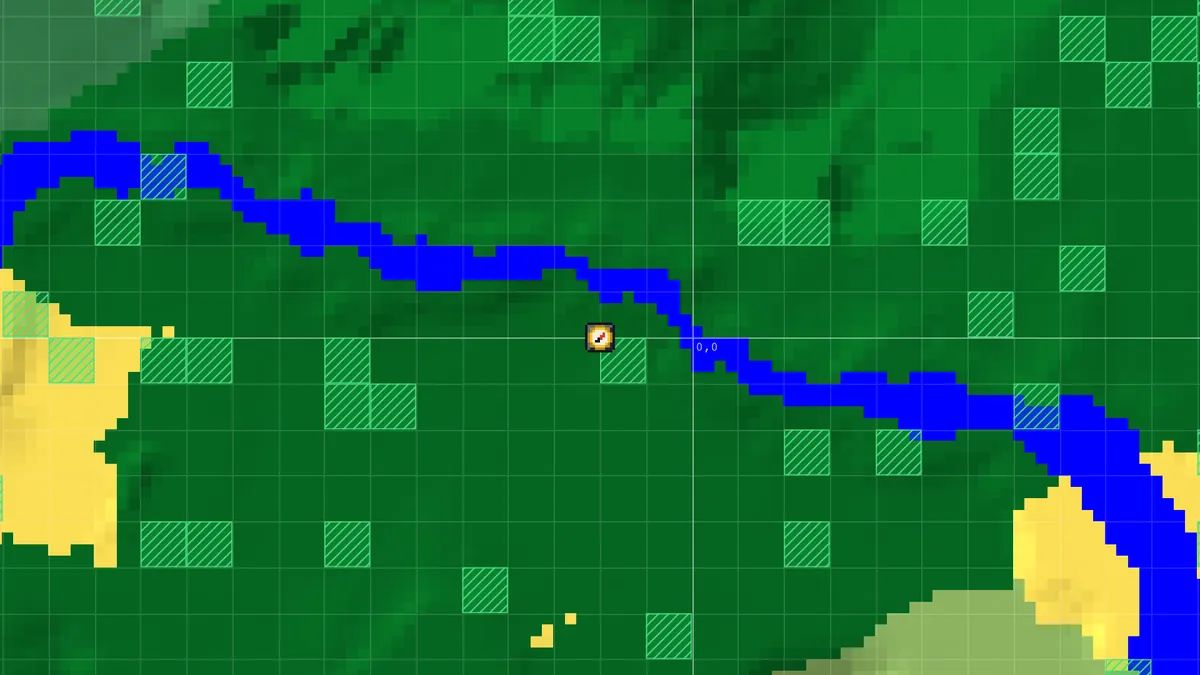
On Java the cave finder marks the huge cheese caves of 1.18+, which make a dramatic underground base or a mining shortcut, and the diamond finder tells you whether the deep layers under your site are rich or poor. A base on top of a large cave also means a lot of lighting before it is safe; the map shows that cost in advance.
Think about the Nether side
Divide your candidate coordinates by eight and look at the Nether map there. A fortress or a bastion within 200 Nether blocks of the portal position is a convenience for years; a lava ocean at the portal position is a lot of bridging. On seed 0, a base at spawn puts the Nether portal at -4, 0, with a fortress at 240, 32 and a bastion at 176, -224, both an easy tunnel away.
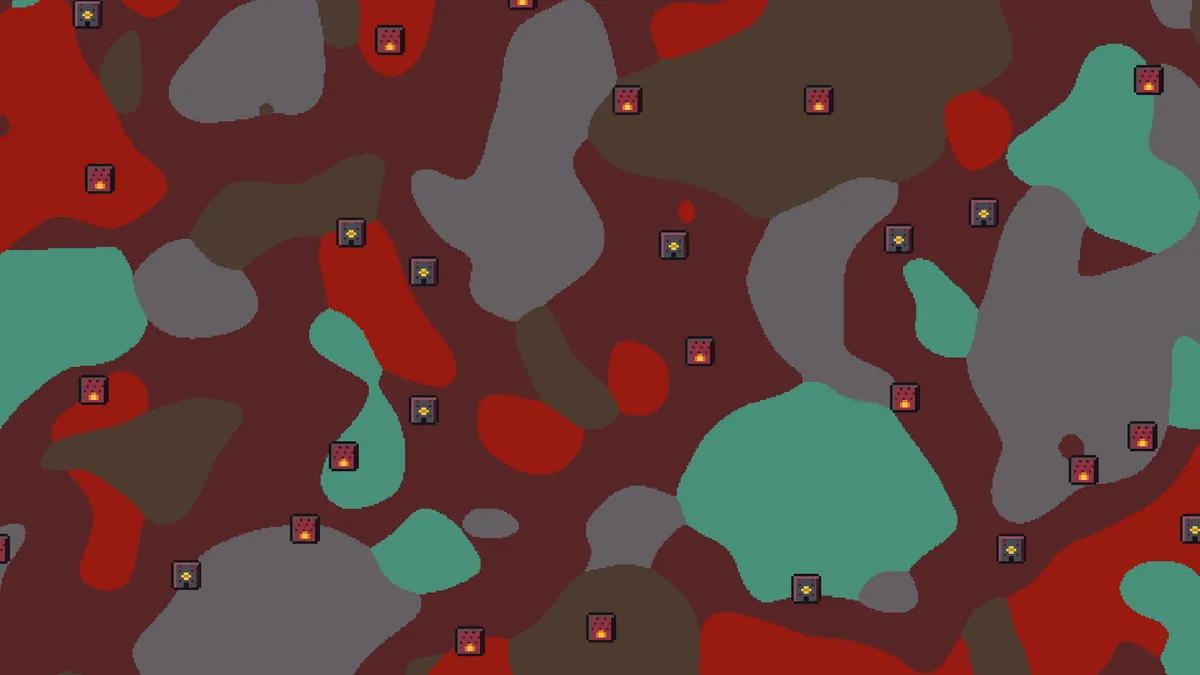
The portal calculator gives the Nether coordinates and the search area, which also tells you whether the base portal would link to a portal you already have. Future portals, for a distant farm or a second base, are easier to plan around a hub that sits near the first.
Spawn chunks and respawn
The chunks around the world spawn stay loaded with nobody in them, which keeps farms running and villagers restocking while you are away. The spawn chunk calculator draws them for your version and spawn, and the spawn point finder estimates the spawn itself. A base inside the spawn chunks is the only place where an iron farm or a crop farm produces 24 hours a day without a player nearby.
Against that, a base at spawn is where every new player on a server appears and where you respawn without a bed. Many players put the main base a few hundred blocks out and leave a compact farm complex in the spawn chunks, connected by a short Nether tunnel or an ice road.
Let the map suggest sites and plan the trip
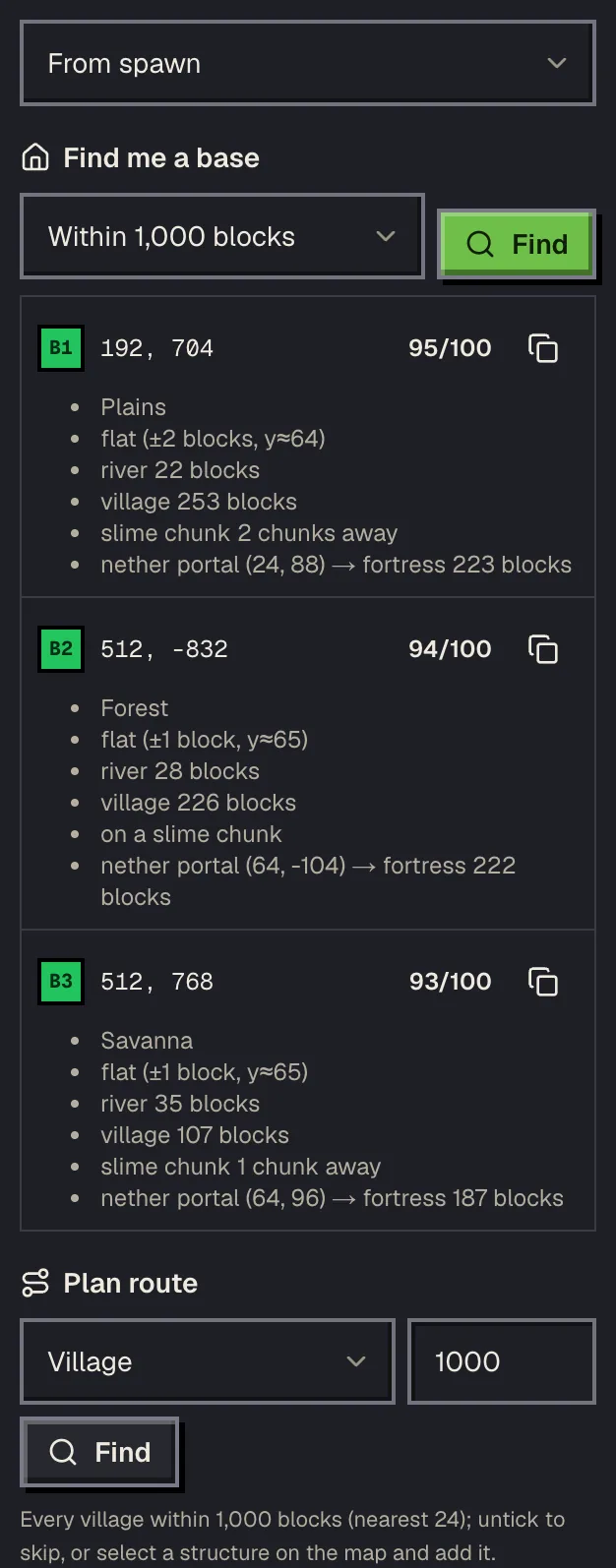
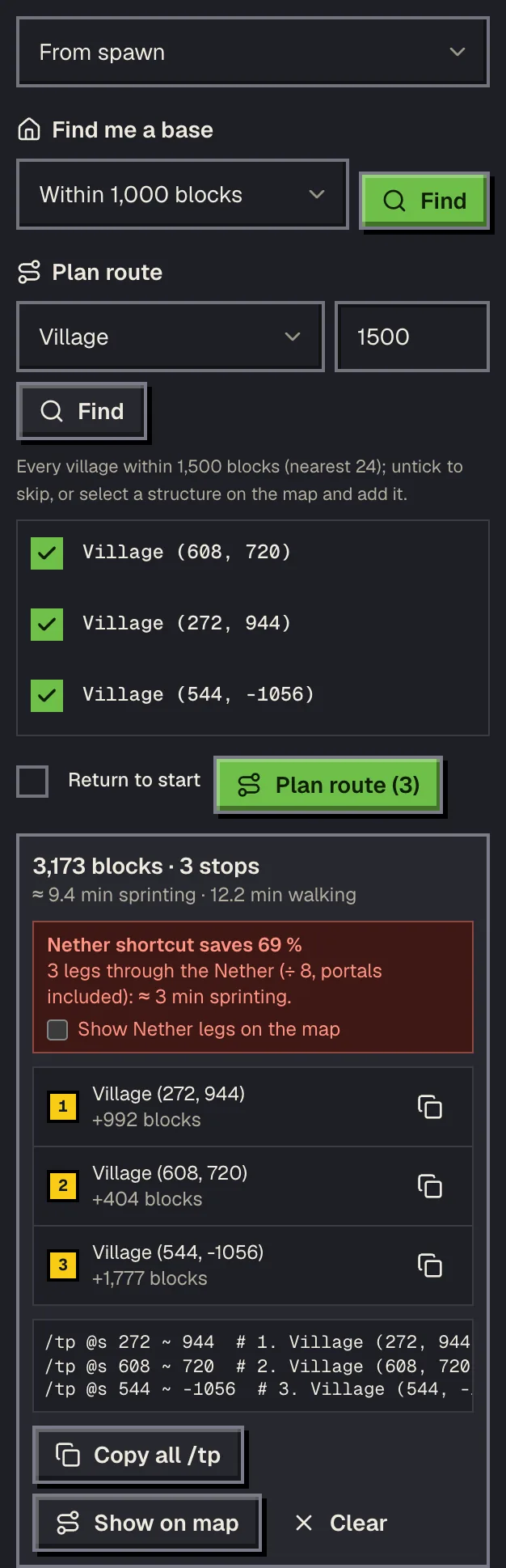
The map's planner panel, in the sidebar on desktop and a tab of the bottom sheet on phones, has two tools for this. Find me a base scores candidate sites within a radius you choose, weighing nearby structures, biome, water and slime chunks, and lists the best ones with the reasons: a village 300 blocks west, two slime chunks underneath, a river on the east side. Plan route takes the structures you pick, or a request such as all villages within 1,000 blocks, and draws the best visiting order on the map with leg distances, the total, an estimated time and a /tp line per stop. Every distance in both comes from the engine for your seed, so the suggestions are facts, not vibes.
- Flat or gently sloping ground, with a biome you like, bordered by at least one other biome.
- Water within 50 blocks and an ocean or river route in one direction.
- Village and trial chambers within 500 blocks; a ruined portal within 300.
- At least one slime chunk under the site; two touching is better.
- A fortress or bastion within 200 Nether blocks of the portal position.
- No outpost, witch hut or large cave within 200 blocks, unless you want it.
Save the chosen site to your library and share the map link with the people you play with. A base that starts with the right numbers rarely needs to move.
Questions
Should I build my base at spawn?
The spawn chunks keep farms running without you, which is valuable, but spawn is also where everyone appears and where you respawn without a bed. A common compromise is a farm complex in the spawn chunks and the main base a few hundred blocks away.
How do I check what is under a site?
Use the slime finder for slime chunks, the cave finder for large caves and the diamond finder for ore density, all on the same seed. They read the same engine, so the answers agree with each other.
What does Find me a base do?
It is a tool in the map's planner panel: it scores candidate sites within a radius you choose using structures, biome, water and slime chunks computed by the engine for your seed, and lists the best ones with the reasons. You still choose; it just removes the guesswork.
Does the Nether matter for a base?
Yes. The base portal's Nether position decides how close your fortress and bastion are and how your Nether hub is laid out. Divide the base coordinates by eight and look at the Nether map there before you settle.
Can I do this for Bedrock?
Yes. Biomes match Java from 1.18, slime chunks are fixed, and villages, fortresses and most structures are placed exactly for Bedrock. Choose the edition first so the distances are right.
Related guides
Finders and tools in this guide
- Seed MapInteractive biome map with every structure, slime chunk and spawn point on one canvas.
- Biome FinderSearch for any biome, from cherry groves to mushroom fields and deep dark.
- Village FinderLocate villages by biome type — plains, desert, savanna, taiga and snowy.
- Slime FinderHighlight slime chunks for Java and Bedrock — build the perfect slime farm.
- Spawn Point FinderSee the exact world spawn and the surrounding spawn chunks.
- Cave FinderJavaHuge cheese caves underground, sized and with the depth to dig to — mining, bases and caving.
- Spawn Chunk CalculatorWhich chunks stay loaded around world spawn, by version.
- Nether Portal CalculatorLink Overworld and Nether portals — coordinates ÷ 8 and search ranges.
Written by the Minecraft Tools team from the same world-generation engine that runs the seed map. Coordinates quoted here were computed with it for the stated seed, edition and version, and the engine is tested against the real game.