Ocean Monuments and Guardian Farms
JavaBedrockOcean monuments are the Overworld's only source of sponges and the heart of the most productive XP farm in the game. How they are placed, how to raid one without drowning, and which monument on your seed is the right one to turn into a farm.
Updated · 6 min read · Java & Bedrock up to 26.3
Where monuments generate
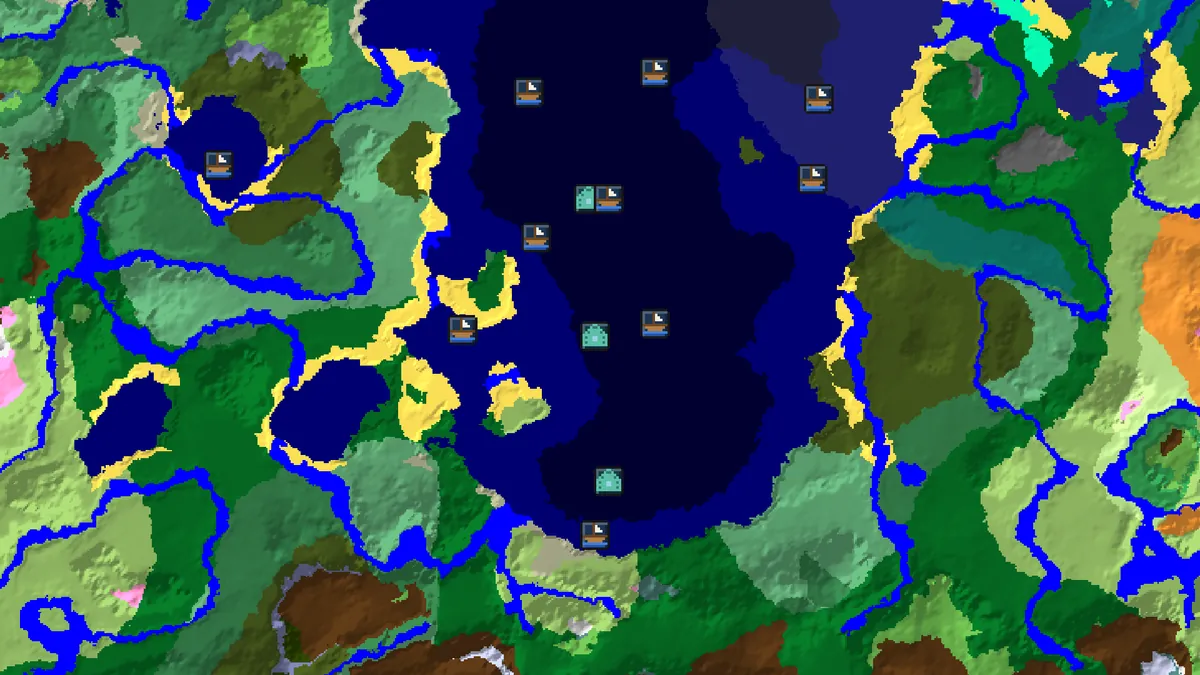
Monuments generate only in deep ocean biomes: deep ocean, deep cold ocean, deep lukewarm ocean and deep frozen ocean, where the sea floor is far below the surface. Java tries one monument per region of 32×32 chunks with a 5-chunk separation and keeps it when the whole area around the attempt is deep ocean, so monuments cluster in large deep oceans and skip narrow seas. Expect one every 500 to 700 blocks across a big ocean and none near a coastline.
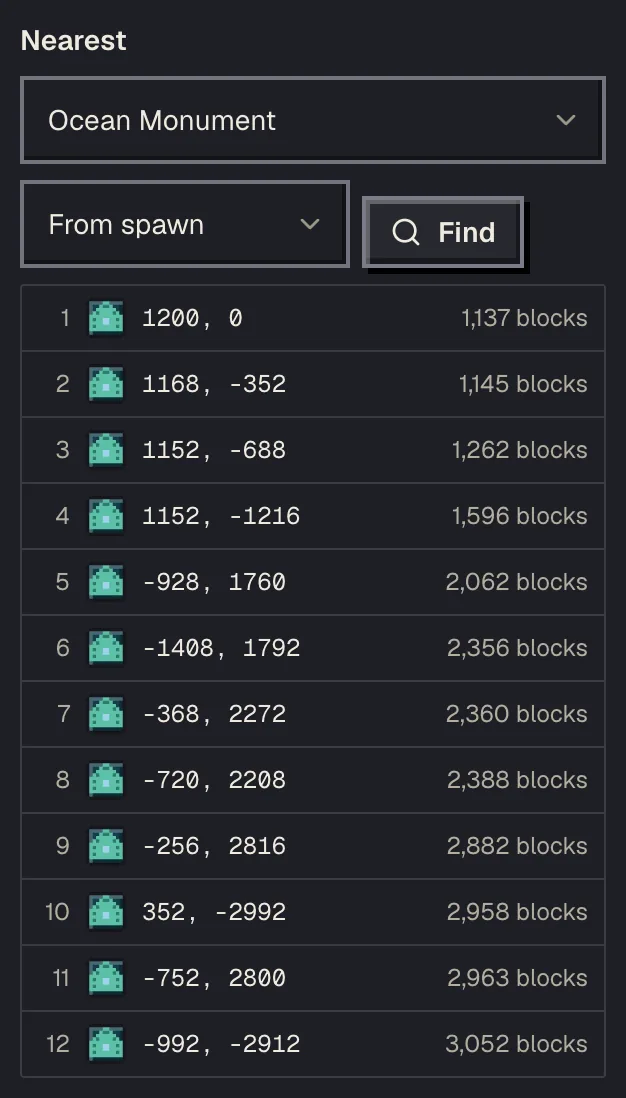
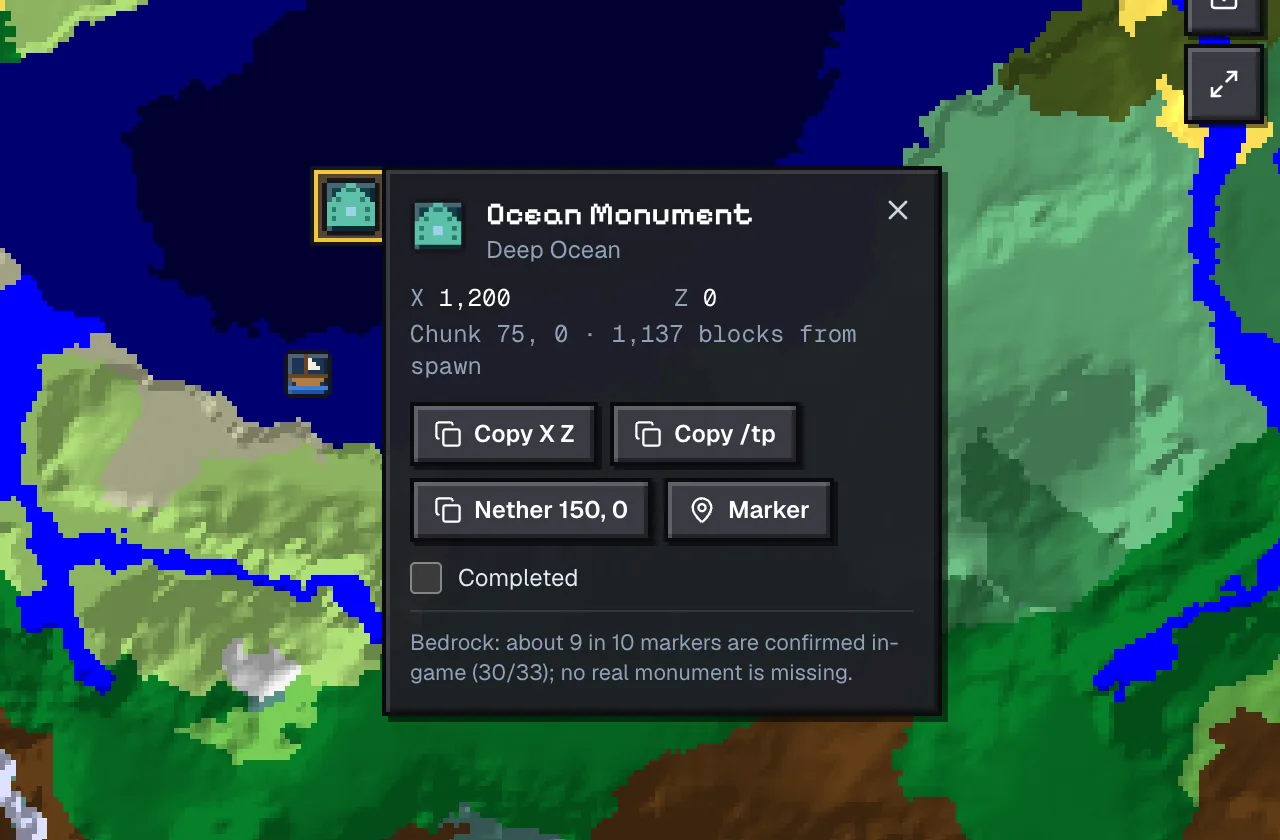
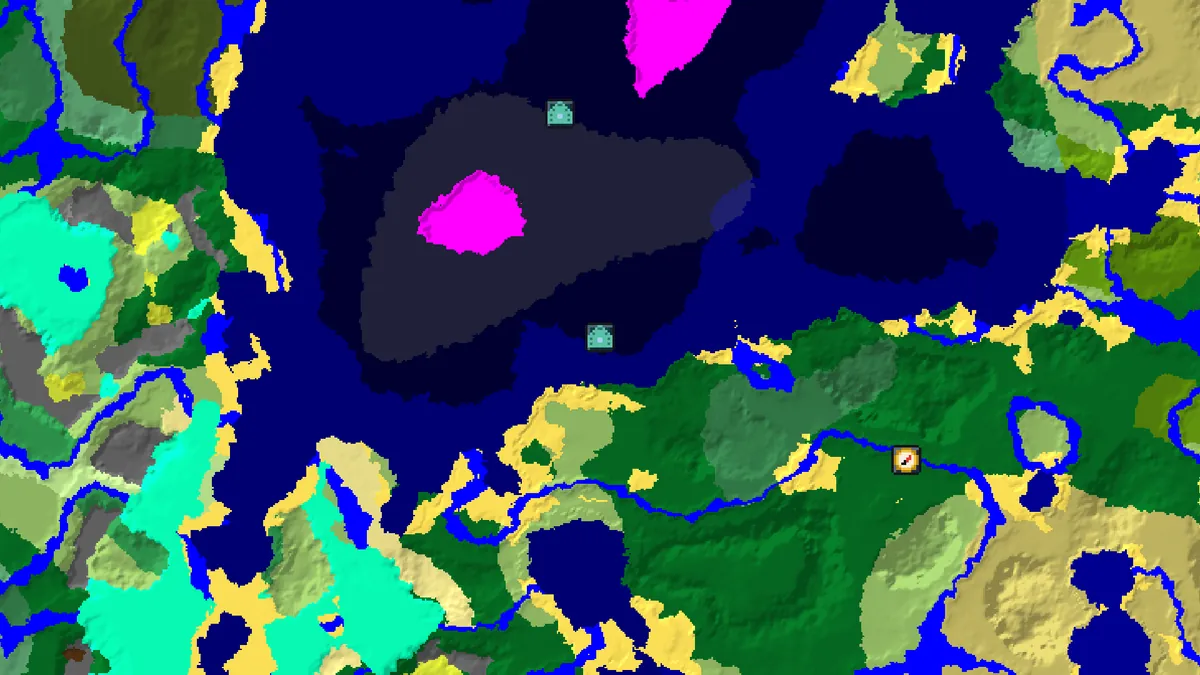
Seed 123456789 has six monuments within 2,000 blocks of spawn, the nearest at 1200, 0, 1,137 blocks east, with two more at 1168, -352 and 1152, -688 in the same ocean. Seed 0 has nine, the nearest at -1136, -240. On Bedrock, seed 0's nearest is at -776, -296, about 800 blocks from spawn.
Seed 123456789 monumentsJava 26.3 · three monuments in one deep ocean east of spawnThe ocean monument finder matched the official Java server on every monument tested and marks Java monuments Exact. On Bedrock about nine in ten markers were confirmed, with no real monument missing, so they carry an Approximate badge there.
Guardians, elder guardians and Mining Fatigue
Guardians are the fish-like mobs with a laser that charges for a couple of seconds before it hits, and thorns that hurt you when you strike them. Three elder guardians live in each monument: one in the top room and one at each wing. Any elder guardian within about 50 blocks gives you Mining Fatigue III for five minutes, which makes mining almost impossible and is renewed every minute while you are nearby. Kill all three and the monument becomes a normal mine.
- Bring potions of Water Breathing and Night Vision, or a turtle helmet and a conduit if you have one; milk cures Mining Fatigue for a moment.
- Doors and a bucket make air pockets; a door placed against a wall gives you a breath and a place to fight from.
- Break line of sight when a guardian's laser starts charging; it only fires if it can still see you.
- Elder guardians drop wet sponges and prismarine; killing them also unlocks the monument for mining.
What is worth taking
The treasure room in the centre hides eight gold blocks behind dark prismarine, a modest payout compared with the structure itself: thousands of prismarine, prismarine bricks and dark prismarine blocks and dozens of sea lanterns, the best light source for underwater builds. Sponge rooms hold wet sponges, which dry in a furnace or a Nether and are the only renewable way to clear water fast; they are the real prize for anyone planning an underwater base or a drained farm.
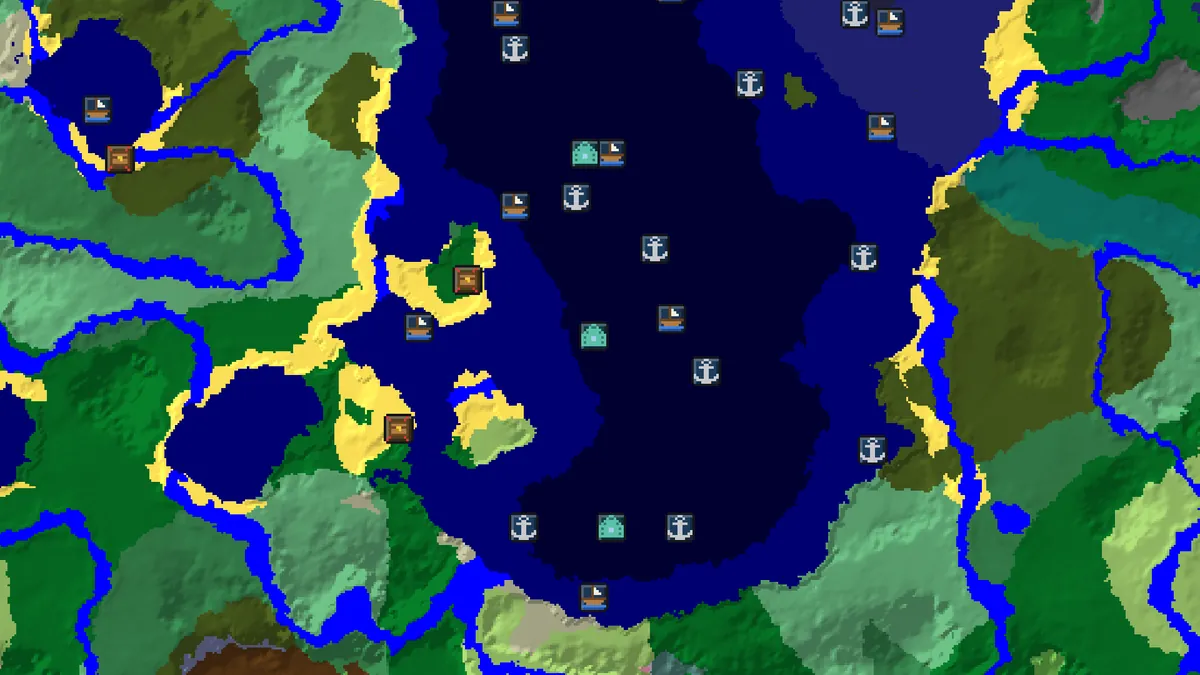
Not every monument has a sponge room. If yours does not, the elder guardians still drop one wet sponge each, and the shipwreck, ocean ruin and buried treasure finders show the other loot in the same ocean, usually within a few hundred blocks of the monument.
Choosing a monument for a guardian farm
Guardians spawn in water inside the monument's bounding box, 58 by 58 blocks across and 23 blocks tall, from the sea floor up to the top of the structure. A guardian farm removes the monument, or part of it, so guardians spawn into flowing water that carries them to a kill chamber, and it is the fastest XP and prismarine farm in the game: a good one gives several levels a minute.
The seed decides which monument to use. You want one that is close enough to reach by portal or boat, in a biome without rain if you plan to AFK on the surface, and ideally the only monument within 128 blocks so no second spawning area competes for the mob cap. Deep frozen oceans are attractive because the ice makes draining easier; deep lukewarm oceans spawn tropical fish that fill the cap.
Compare the three monuments on seed 123456789: the ones at 1168, -352 and 1152, -688 are 336 blocks apart, fine for two farms but too close for the mob cap if you build one between them, while the monument at 1200, 0 stands alone at the edge of the ocean. The map's Nearest list and the coordinate readout give you these distances before you place a block.
Draining versus building in water
Two designs dominate. Drained farms enclose the monument's area with walls, remove the water with sponges and sand, and build spawning platforms with water streams, which gives the highest rates but costs many hours and a few stacks of sponges. Non-drained farms keep the water and use the monument's own structure or a simple column design, trading rates for a build you can finish in an evening.
Either way, kill the elder guardians first, light nothing (guardians ignore light), and make sure no other spawning spaces exist within 128 blocks of your AFK spot: the sea floor outside the bounding box spawns drowned and squid that count against the cap. The coordinate calculator gives the block range of the monument's chunks, which is how you mark the box.
Monuments on Bedrock
Bedrock places monuments with its own 32-chunk algorithm and the finder implements it; the Approximate badge reflects the one in ten markers the game cancelled in testing. Bedrock's guardian spawning rules also differ a little from Java's, and Bedrock elder guardians drop their sponge from a separate loot roll, so designs built for Java need small changes. The monument positions, however, are where Bedrock players should start.
Questions
What biomes have ocean monuments?
Deep ocean, deep cold ocean, deep lukewarm ocean and deep frozen ocean. The whole area around the attempt must be deep ocean, so monuments avoid coasts and narrow seas.
How do I get rid of Mining Fatigue?
Kill the three elder guardians, one at the top and one in each wing. Until then, milk removes the effect briefly and you can still break blocks slowly with Haste II from a beacon.
Are sponges guaranteed in a monument?
No. Sponge rooms are optional, but each elder guardian drops a wet sponge, so every monument yields at least three.
How big is the guardian spawning area?
The monument's bounding box, 58×58 blocks horizontally and 23 blocks tall. Guardians spawn in water blocks inside it, regardless of light.
Is the monument finder exact?
On Java, yes: every monument tested was found in the official server's world. On Bedrock about nine in ten markers were confirmed in-game, so they are marked Approximate.
Related guides
Finders and tools in this guide
- Ocean Monument FinderGuardian temples with sponges and prismarine, out in deep oceans.
- Shipwreck FinderWrecks with treasure maps, supplies and buried loot.
- Ocean Ruin FinderCold and warm ocean ruins with drowned and tridents nearby.
- Buried Treasure FinderTreasure chests with a heart of the sea on beaches and shores.
- Coordinate CalculatorConvert between block, chunk and region coordinates, and measure distance.
Written by the Minecraft Tools team from the same world-generation engine that runs the seed map. Coordinates quoted here were computed with it for the stated seed, edition and version, and the engine is tested against the real game.