Text Seeds: How a Word Becomes a World
JavaBedrockType a word into the seed box and the game quietly turns it into a number. The rule is short, the consequences are not: capital letters change the world, two different numbers can share every village, and old Bedrock treated one seed as random. All of it with examples you can check.
Updated · 6 min read · Java & Bedrock up to 26.3
The rule
The seed box accepts anything. The game trims spaces from both ends and then asks one question: is what is left a whole number that fits in 64 bits? If yes, that number is the seed, sign and all. If not, the text goes through Java's String.hashCode function and the 32-bit result becomes the seed. An empty box means a random seed. Both editions behave the same way, and the seed converter applies the same rule so you can see which path your input takes.

| You type | Read as | Seed |
|---|---|---|
| 42 | number | 42 |
| +42 | number | 42 |
| -0 | number | 0 |
| 4 2 | text (a space inside) | 51014 |
| 1.5 | text (a decimal point) | 48568 |
| 9223372036854775807 | number (the largest that fits) | 9223372036854775807 |
| 9223372036854775808 | text (one too big) | -1773151197 |
| 99999999999999999999 | text | 1260560192 |
The hash, done by hand
hashCode walks the text one character at a time. It starts at zero, and for each character multiplies the running total by 31 and adds the character's code, wrapping around whenever the total leaves the 32-bit range. For a single letter the seed is just its code: the seed for a is 97. For ab it is 97 × 31 + 98 = 3105. Longer words wrap around many times, which is why most text seeds look like random nine- or ten-digit numbers, half of them negative.
| Text | Seed |
|---|---|
| hello | 99162322 |
| minecraft | 695073197 |
| Minecraft | -1595926131 |
| seed | 3526257 |
| Seed | 2572945 |
| herobrine | -1993439786 |
| Herobrine | 10528182 |
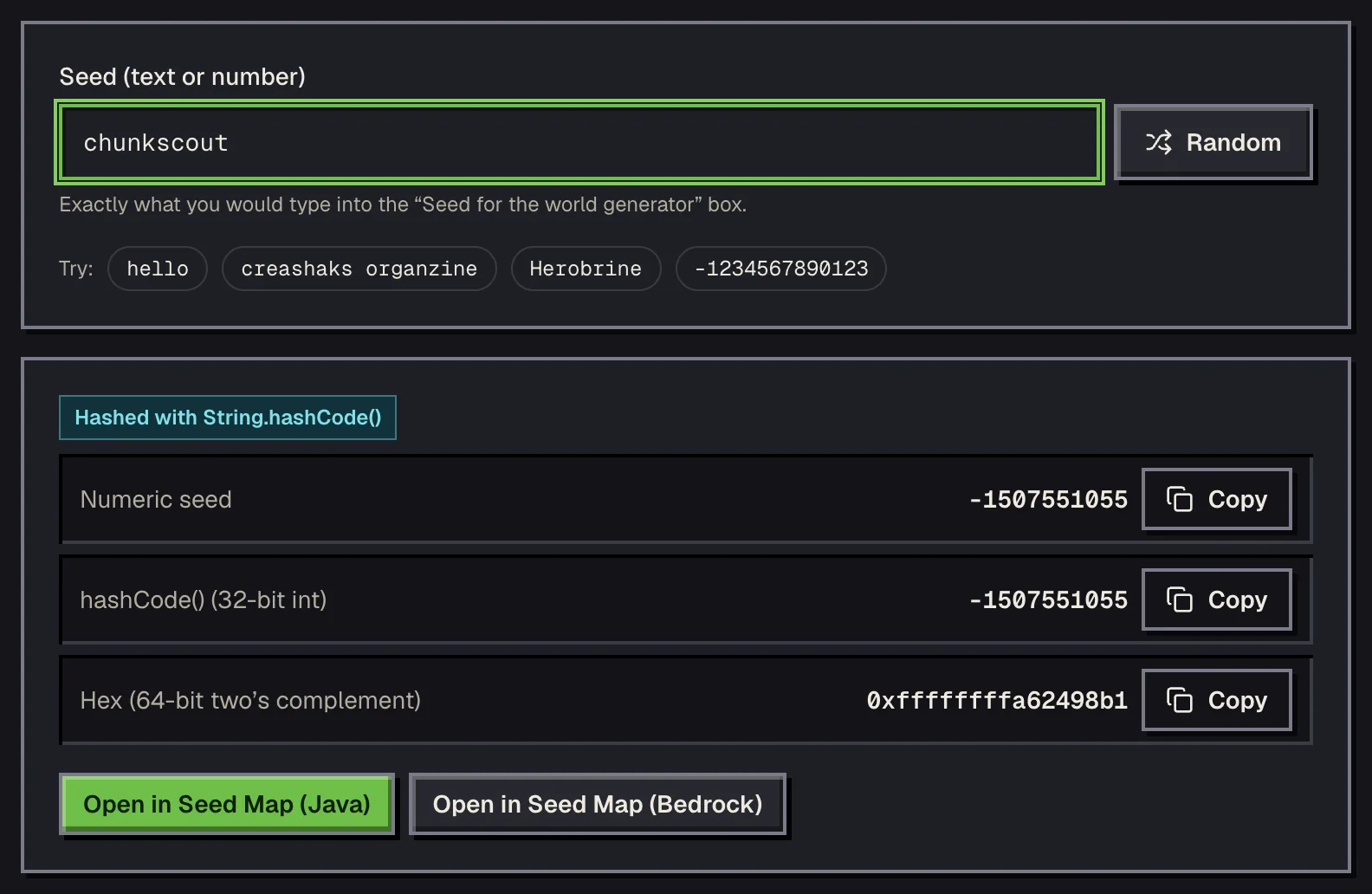
| chunkscout | -1507551055 |
| creashaks organzine | 0 |
Two things in that table bite people. Capital letters are different characters, so Minecraft and minecraft are two unrelated worlds, as are the two spellings of Herobrine. And the phrase creashaks organzine hashes to exactly zero, a party trick that has been passed around for years and still works; it is also a way to reach seed 0 on an old Bedrock version that refused the digit itself.
Four billion words, eighteen quintillion numbers
Because hashCode produces a 32-bit result, every text seed in existence lands somewhere in a range of about 4.3 billion values. Numeric seeds use the full 64 bits, roughly 18 quintillion values. So text seeds can reach only one world in every four billion that the game can generate. The worlds they do reach are perfectly ordinary, and a hashed seed behaves like any other once it is a number; the point is only that a huge number of possible worlds cannot be typed as words.
If you are hunting for something specific with the seed finder, that is an argument for letting it search numbers. If you just want a memorable seed to give friends, a word is fine, and sharing the number alongside it removes the capital-letter trap.
Bedrock's old 32-bit seeds
Bedrock used 32-bit seeds for years, which is the same range text seeds live in, and it treated seed 0 as a request for a random seed. Since Bedrock 1.18.30 seeds are 64-bit and 0 is an ordinary world, which is also when the Overworld biome generator became the same as Java's for the same number. A Bedrock seed from before that change still works, since every 32-bit value is a valid 64-bit value, but a long numeric seed from a modern Java world cannot be typed into an old Bedrock version at all.
One more Bedrock detail that matters for the map: Bedrock's structure placement only reads the lower 32 bits of the seed, while its biome generation reads all 64. Two Bedrock seeds that share their lower 32 bits have identical village, temple and fortress attempts under different terrain. That has a Java cousin, which is the next section.
Sister seeds: same structures, different land
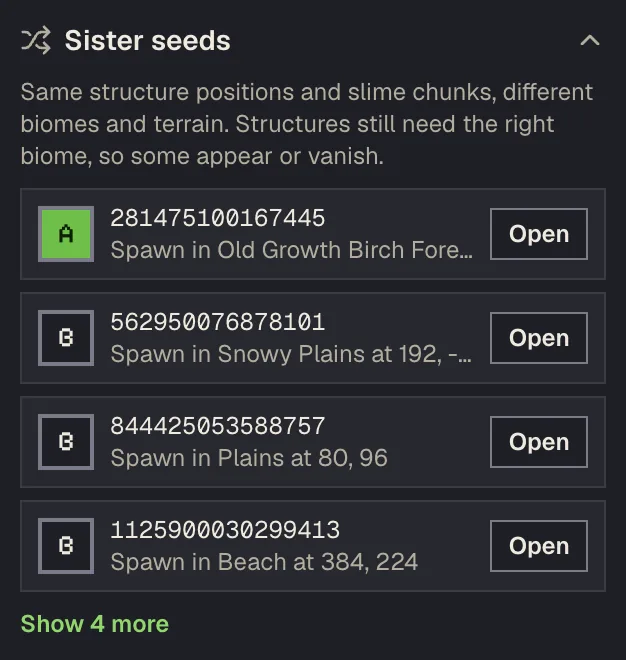
Java's structure placement and its slime chunk formula read only the lower 48 bits of the seed. The 1.18 biome and terrain noise read all 64. So any two seeds that differ only in their top 16 bits, which means they differ by a multiple of 2 to the power 48, or 281,474,976,710,656, make the same structure attempts and the same slime chunks on top of completely different land. Each seed has 65,535 such siblings.
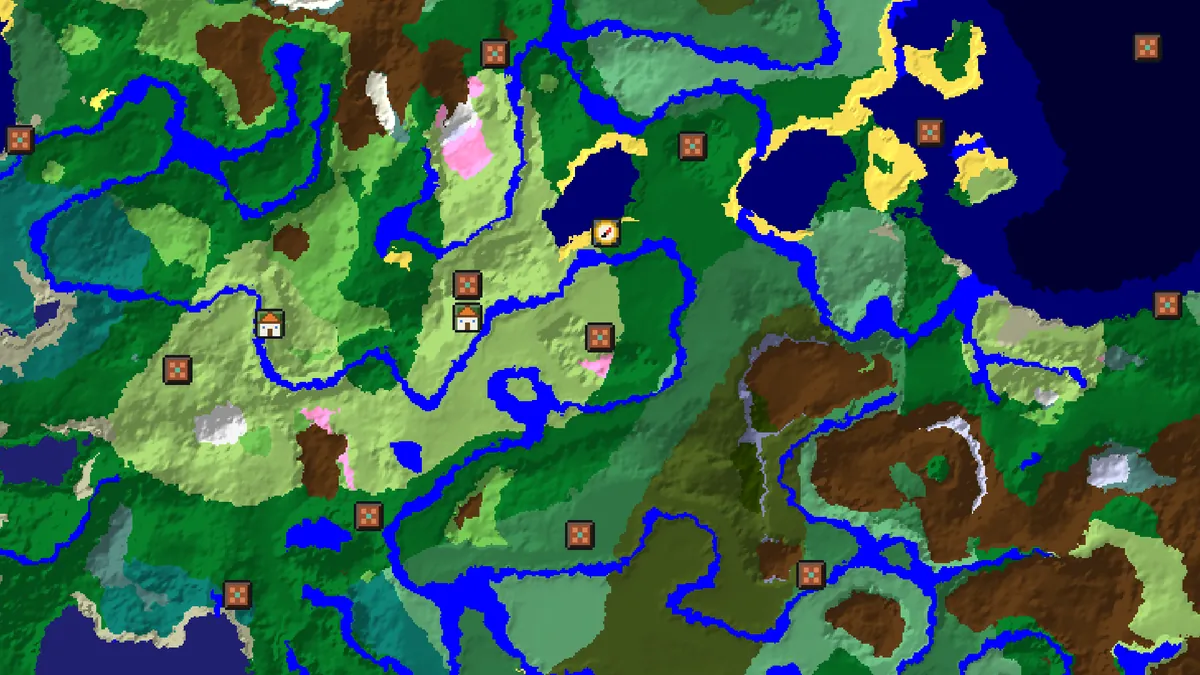
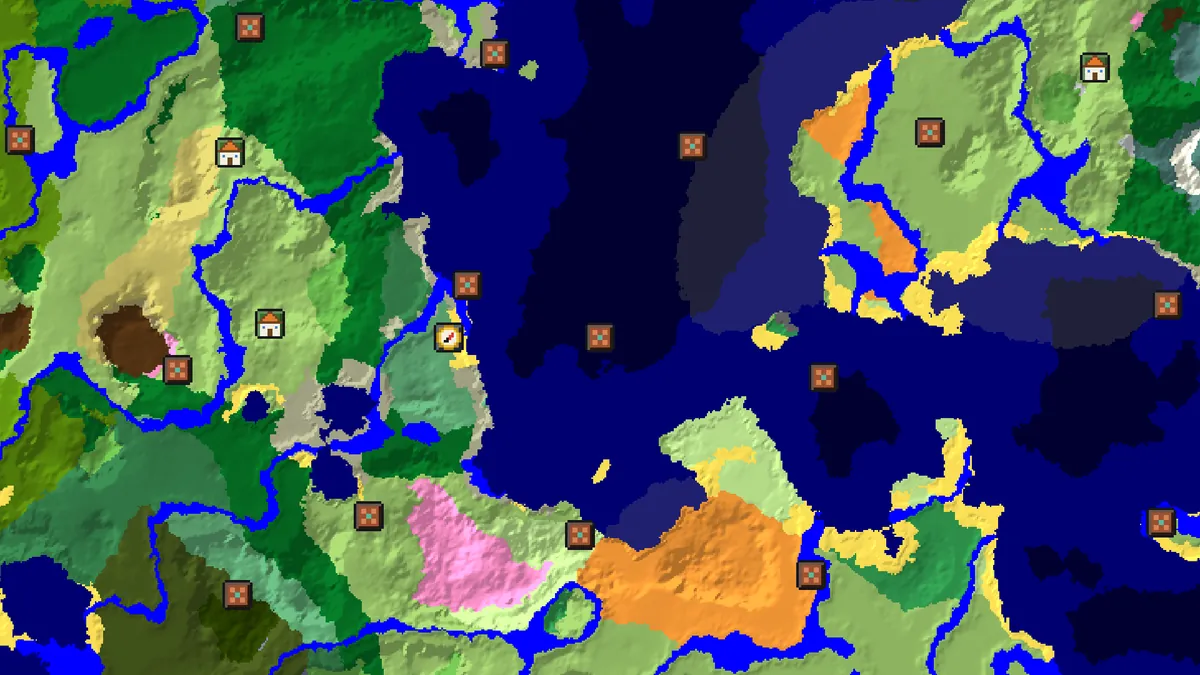
Seed 123456789 and its sister 281475100167445 are a good pair to try. Both have trial chambers at -208, -480, 272, -256, -272, 80 and 48, 208, and both have a plains village at -752, 176. But the first spawns at 64, -48 in a forest and the second at -320, 208 in an old growth birch forest, and their other village attempts come out differently because the biome under each attempt changed: the sister has six villages within 1,500 blocks where the original has four. Strongholds move by a few dozen blocks for the same reason, since they are nudged toward valid biomes after the ring position is chosen.
The slime seed finder leans on this. It searches the 48 bits that slime chunks depend on, which is a smaller space than the full 64, and every result comes with its sisters so you can pick the one whose biomes you like. The same trick works for structure layouts: find a seed with the villages where you want them, then browse its sisters for the terrain.
Questions
Are text seeds random?
No. The same text always gives the same number through String.hashCode, on Java and on Bedrock. Only an empty seed box gives a random seed.
Why does my seed look different from what I typed?
The game shows the number it derived from your text. For example typing chunkscout produces the seed -1507551055, and that number is what /seed prints and what appears in the world settings.
Do capital letters matter in a seed?
Yes. Each character's code goes into the hash, and A and a are different codes, so Herobrine (10528182) and herobrine (-1993439786) are unrelated worlds.
What is a sister seed?
On Java, a seed that differs from yours by a multiple of 281,474,976,710,656. Sisters share every structure attempt and every slime chunk, because those read only the lower 48 bits, but have different biomes and terrain.
Can I type a long numeric seed into Bedrock?
On Bedrock 1.18.30 and later, yes; seeds are 64-bit. Older Bedrock versions used 32-bit seeds and treated 0 as random.
Related guides
Finders and tools in this guide
- Seed MapInteractive biome map with every structure, slime chunk and spawn point on one canvas.
- Slime FinderHighlight slime chunks for Java and Bedrock — build the perfect slime farm.
- Trial Chamber FinderCopper-lined trial chambers with spawners, vaults and breeze rods.
- Seed ConverterTurn a text seed into its numeric value (String.hashCode, same on Java and Bedrock).
Written by the Minecraft Tools team from the same world-generation engine that runs the seed map. Coordinates quoted here were computed with it for the stated seed, edition and version, and the engine is tested against the real game.