Trial Chambers: Where They Generate and Loot
JavaBedrockTrial chambers are the most common large structure in modern Minecraft, with one about every 500 blocks, and the only way to get a mace. How they are placed, what is inside, how the trial and ominous trial loops work, and how to pick the closest one from your seed.
Updated · 6 min read · Java & Bedrock up to 26.3
Where trial chambers generate
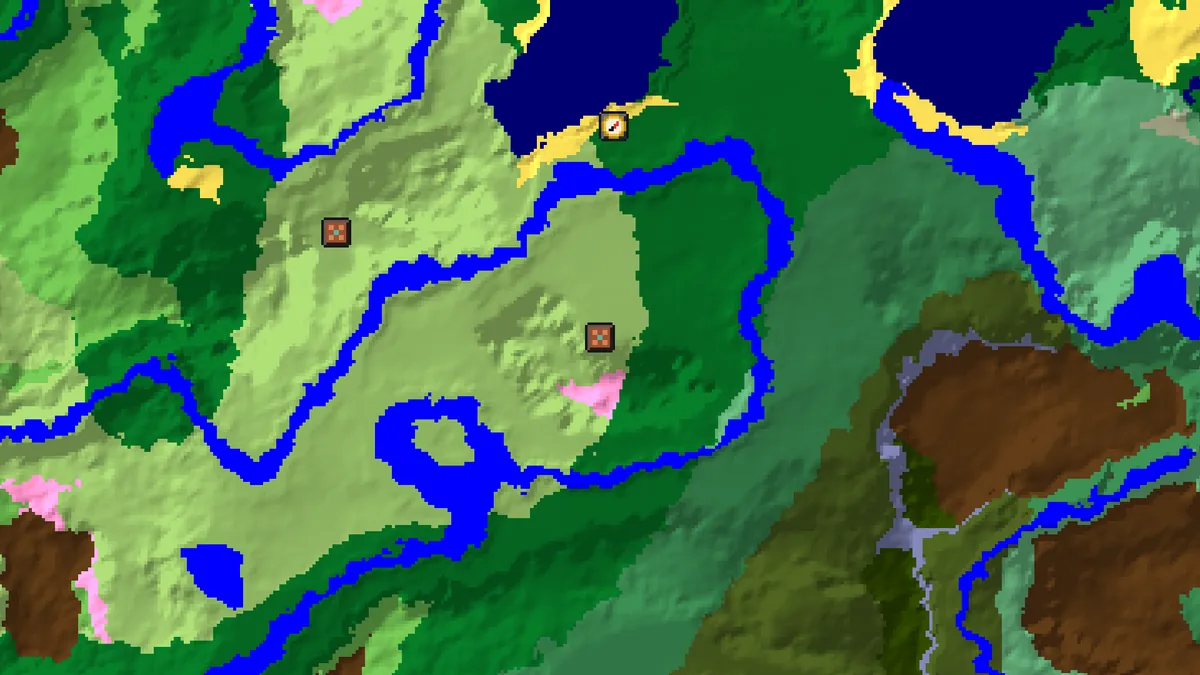
Trial chambers arrived in 1.21 and generate underground between roughly Y -20 and Y -40, in almost any Overworld biome except the deep dark. On Java they use regions of 34×34 chunks with a 12-chunk separation, one attempt per region, and since the biome check almost always passes, nearly every region has one. That works out to one chamber per 544-block square, or around 50 within 2,000 blocks of spawn on any seed.
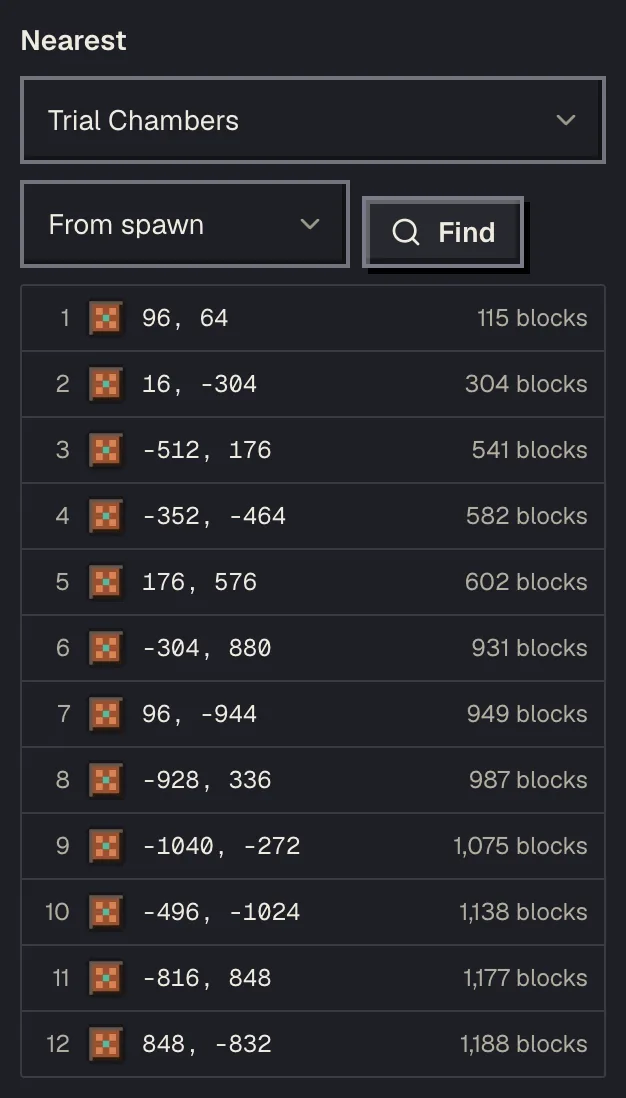
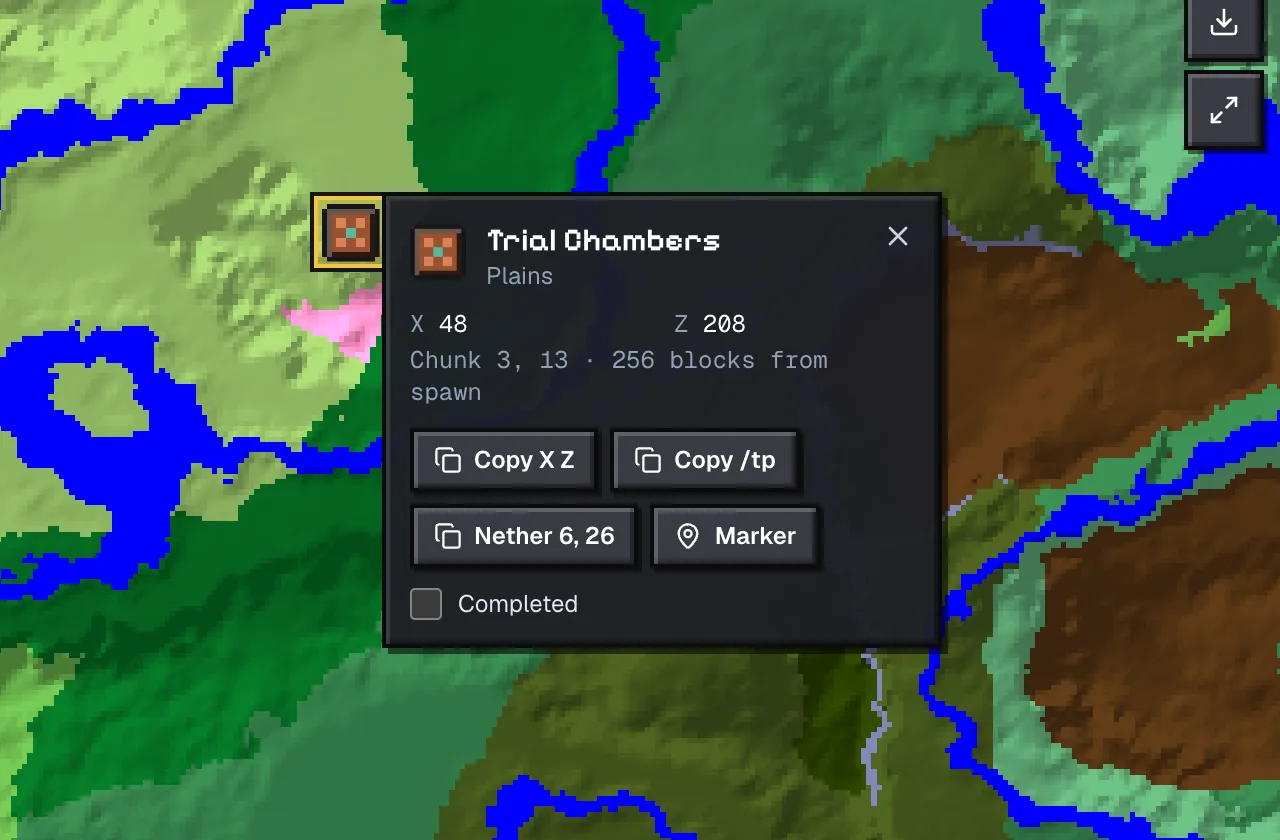
The numbers from our test seeds show how reliable that is: seed 123456789 has 52 chambers within 2,000 blocks and the nearest 256 blocks from spawn at 48, 208; seed 0 has 55 with the nearest at 224, 80; seed 8675309123456789 has 54 with the nearest only 115 blocks away at 96, 64. Whatever seed you play, a chamber is close.
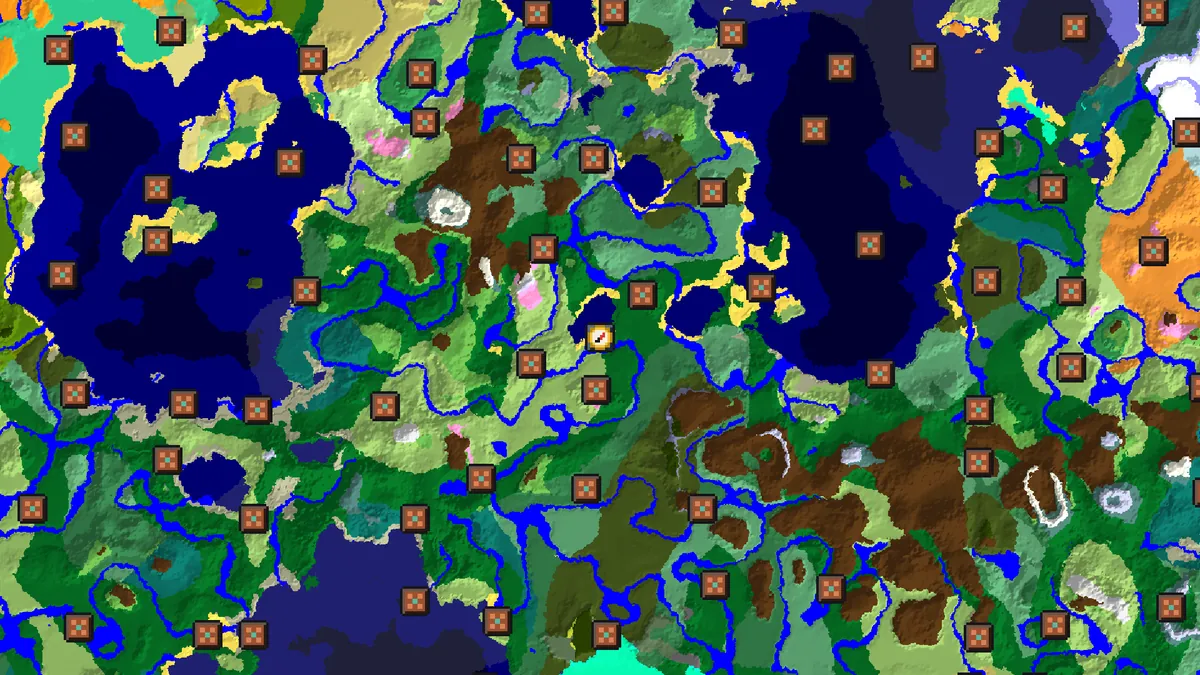
Bedrock added trial chambers in 1.21.0 and the trial chamber finder implements Bedrock's placement for 1.21.3 and later, confirmed against the Bedrock Dedicated Server. Select the edition and a 1.21+ version; older versions hide the chambers because they do not exist there.
Getting in
A chamber is a sprawl of rooms built from tuff and copper, 20 to 40 blocks below sea level, connected by corridors and often sliced open by caves. The easiest entrance is a cave: the cave finder shows large caves near the marker, and copper or tuff visible in a cave wall at the right depth is the sign. Otherwise dig a staircase down at the coordinates; you will hit the structure's roof around Y -20.
Cartographers sell trial explorer maps from 1.21 on, which is the in-game way to the same answer. The map here is faster and shows every chamber, so you choose the one in the direction of your next base, not the one a villager happens to sell.
Trial spawners and keys
Rooms are guarded by trial spawners, a new kind of spawner that activates when a player comes near, spawns a fixed number of mobs scaled to how many players are present, then ejects loot and goes on cooldown for 30 minutes. Mobs include zombies, skeletons, spiders, slimes, husks, strays, bogged, silverfish, breezes and baby zombies, varying by room.
Clearing a spawner drops its rewards, which can include a trial key. Each key opens a vault once per player: vaults are block-like containers in the walls that eject loot when you use a key, and they remember who has opened them, so every player on a server gets their own loot from every vault without resetting anything.
Vault loot includes emeralds, diamonds, enchanted books, golden apples, emerald blocks, iron and diamond gear, trident, bolt and flow armour trim templates and, rarely, the guster banner pattern and music disc Precipice.
Ominous trials, heavy cores and the mace
Drink an Ominous Bottle, dropped by raid captains and found in vaults, to get the Bad Omen effect; enter a trial chamber with it and it becomes Trial Omen. Spawners near you turn ominous: harder mobs, ominous potions and ominous item spawners raining projectiles from above. Ominous spawners drop ominous trial keys, which open the ominous vaults with the orange-marked frames.
Ominous vaults are the only source of heavy cores. Combine a heavy core with a breeze rod and you get the mace, a weapon that deals damage scaled by how far you fall before hitting, with its own enchantments: Density, Breach and Wind Burst. Breeze rods drop from the breeze, the chamber's signature mob, a hopping wind elemental that fires wind charges; its rods also craft wind charges for launching yourself.
A chamber run, room by room
- Bring a shield, a bow for breezes, food, blocks for sealing corridors and torches; chambers are dark but their mobs come from spawners, not darkness.
- Enter through a cave or your staircase and find a corridor. Mark the entrance on the map so you can leave quickly.
- Approach each spawner alone if you can: the mob count scales with players nearby.
- After a trial, collect the key, open the vault in the same room and move on. Dispensers and trapdoors in corridors are traps; watch the floor.
- Keep a tally of ominous vaults you have seen for the second visit.
Decorated pots in the chambers break for extra loot, and the copper bulbs in the walls are a free copper source if you mine them. The whole structure is worth stripping once you are done with the trials.
Chambers and the rest of the seed
Because chambers are everywhere, they rarely decide which seed to play. They do decide where to put a base: a chamber under your base is a renewable source of emeralds and keys, and a chamber near a village gives you Ominous Bottles from raids and trial loot within the same walk. The village finder and the trial chamber finder read the same seed, so compare the two Nearest lists before you settle.
Ancient cities and trial chambers never overlap, since chambers avoid the deep dark, but the two are often a few hundred blocks apart under the same mountains. Seed 8675309123456789 has both within 250 blocks of spawn, which is the kind of start the seed finder can search for directly.
Questions
At what depth are trial chambers?
Between about Y -20 and Y -40. Dig down at the finder's marker or look for copper and tuff blocks in caves at that depth.
How common are trial chambers?
Very. Java places one attempt per 34×34-chunk region and almost every attempt succeeds, so expect one within a few hundred blocks of any spawn and around 50 within 2,000 blocks.
How do I get a mace?
Open an ominous vault with an ominous trial key for a heavy core, kill a breeze for a breeze rod, and craft the two together. Heavy cores come only from ominous vaults.
Do vaults reset?
Vaults are per player: each player can open each vault once with a key, forever. Trial spawners reset after a 30-minute cooldown.
Are trial chambers in the same place on Bedrock?
No, Bedrock places them with its own algorithm. The finder implements it for Bedrock 1.21.3 and later; choose Bedrock in the edition selector.
Related guides
Finders and tools in this guide
Written by the Minecraft Tools team from the same world-generation engine that runs the seed map. Coordinates quoted here were computed with it for the stated seed, edition and version, and the engine is tested against the real game.