Finding Rare Biomes in Your Seed
JavaBedrockSince 1.18 every biome follows from six noise values. That one fact explains why mushroom fields hide in deep oceans and cherry groves sit on mountains, and once you know it the biome finder's highlight finds the rare biome on your seed in seconds. We measured how far each one is on five real seeds so you can see the spread.
Updated · 7 min read · Java & Bedrock up to 26.3
How biomes are chosen since 1.18
The Overworld biome at any point is decided by six noise values sampled there: temperature, humidity, continentalness, erosion, weirdness and depth. Continentalness separates oceans from inland; erosion decides whether the land is flat or mountainous; temperature and humidity pick the climate; weirdness chooses between variants; depth selects cave biomes underground. Each biome owns a region of that six-dimensional space, and the point gets whichever biome's region it falls in.
That is why rare biomes are rare: they own small regions, often at extreme values. Mushroom fields need the lowest continentalness, which only occurs far out in deep ocean. Cherry groves and meadows need mountainous erosion at moderate height. Ice spikes are a weirdness variant of snowy plains. The deep dark needs great depth under high ground. Since Java and Bedrock share these functions from 1.18 on, a rare biome is in the same place on both editions for the same seed.
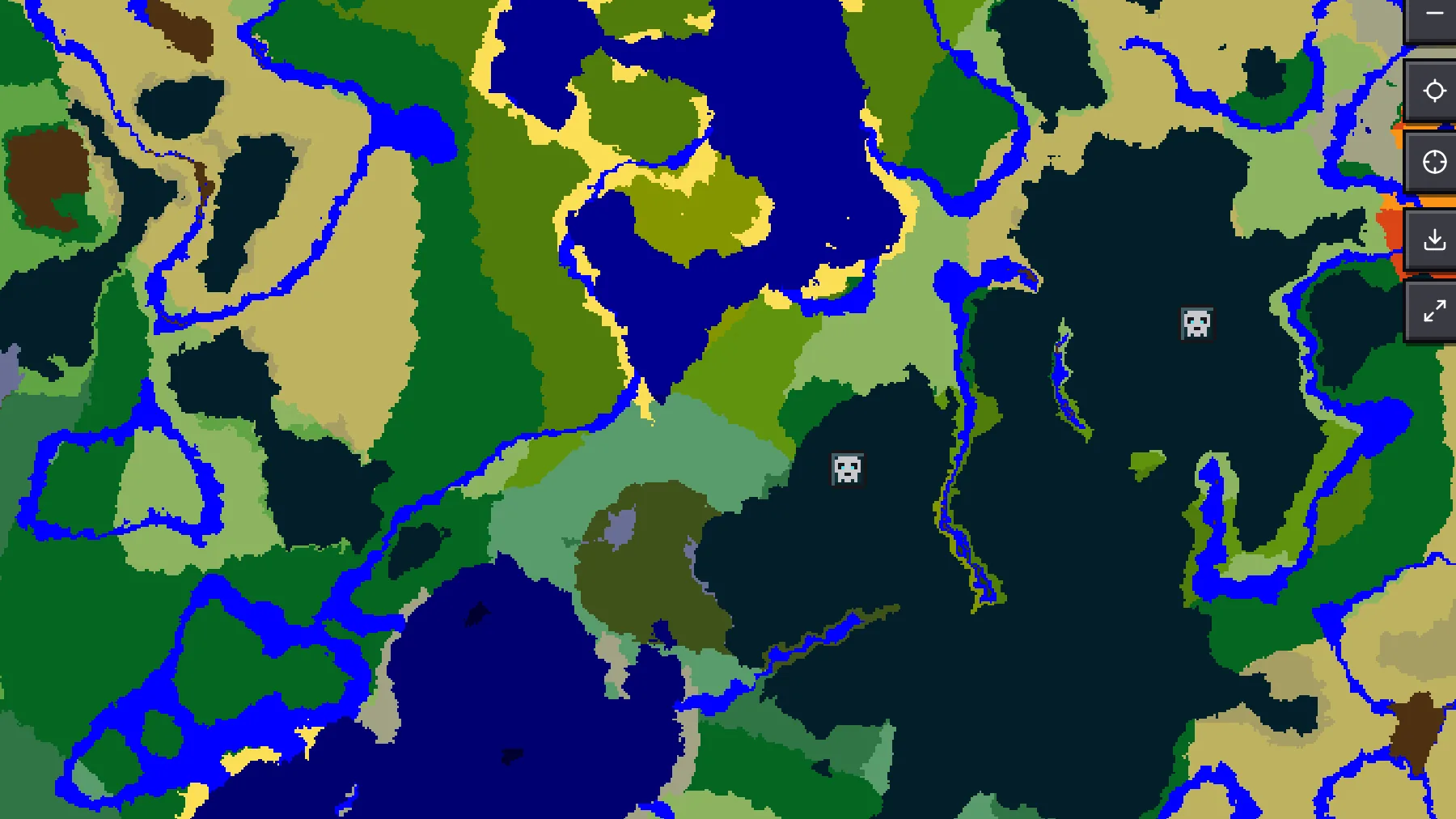
The biome finder draws the result for your seed and the Highlight biome option dims everything except the one you pick. Three biomes popular enough to deserve it have their own pages that highlight on load: the mushroom island finder, the cherry grove finder and the pale garden finder.
How far the rare biomes are on five real seeds
The table gives the distance from spawn to the nearest patch of each biome on Java 26.3, read from the engine's biome map at a 16-block resolution (the deep dark at Y -40), so treat the coordinates as the centre of a patch, not a block to stand on. The spread between seeds is the point: a cherry grove is 300 blocks away on one seed and 2,700 on another.
| Biome | 123456789 | 0 | -1234567890123 | 8675309123456789 | chunkscout |
|---|---|---|---|---|---|
| Cherry grove | 312 | 2,405 | 2,737 | 995 | 2,013 |
| Pale garden | 464 | 1,776 | 2,605 | 258 | none within 4,000 |
| Mushroom fields | 3,047 | 1,087 | 1,695 | 3,566 | none within 4,000 |
| Ice spikes | 2,965 | 3,426 | 1,998 | 1,760 | 1,370 |
| Jungle | 2,104 | 575 | 219 | 204 | 2,666 |
| Badlands | 3,174 | 1,746 | 2,859 | 1,178 | 3,385 |
| Dark forest | 431 | 1,702 | 640 | 168 | 2,003 |
| Mangrove swamp | 2,004 | 2,637 | 126 | 2,392 | none within 4,000 |
| Deep dark (underground) | 297 | 1,098 | 2,068 | 183 | 1,826 |
Seed 8675309123456789 is the biome collector's seed: a pale garden about 258 blocks from spawn around -72, 248, a dark forest at 168 blocks, bamboo jungle and jungle within 210, lush caves and the deep dark underground within 190, and a cherry grove under 1,000 blocks away. Seed 0 has the closest mushroom fields of the five, around -968, -552, a thousand blocks from spawn and reachable by boat across the deep ocean that surrounds it.
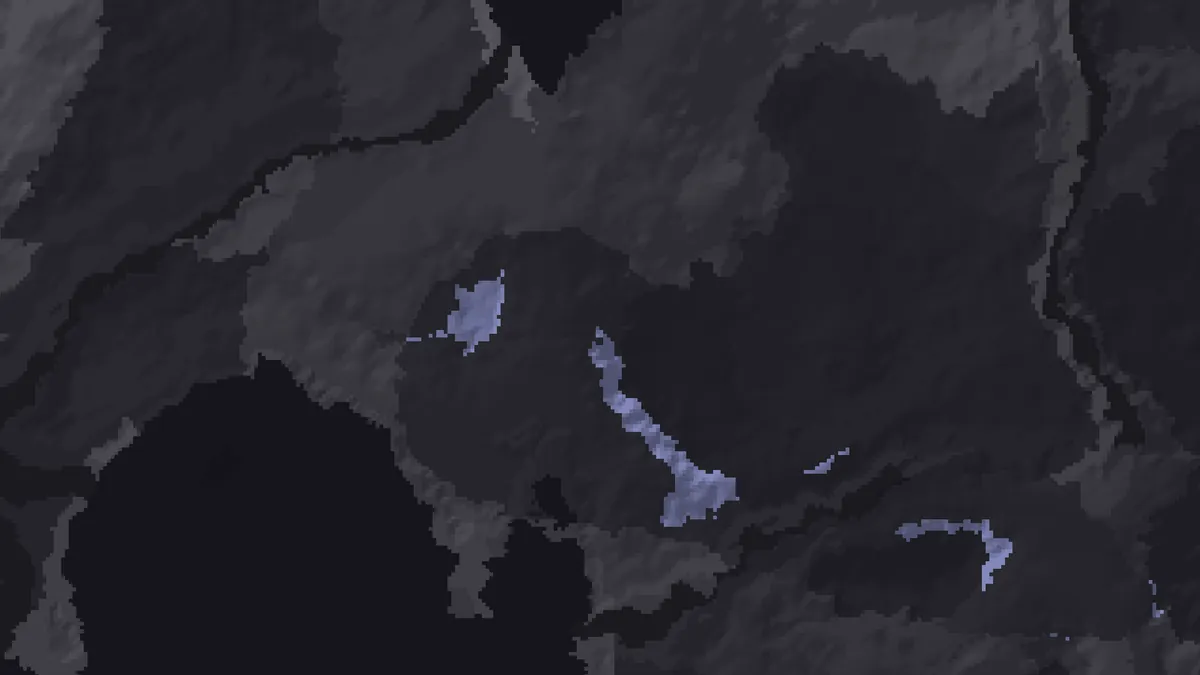
Seed 8675309123456789 pale gardenJava 26.3 · a pale garden about 260 blocks from spawn, highlighted on loadMushroom fields
Mushroom fields are the safest biome in the game: no hostile mobs spawn there naturally, even in the dark, and the mooshrooms give milk, mushroom stew and leather. They form only at the lowest continentalness, which means an island in deep ocean, far from any other land, usually 1,000 to 3,000 blocks from spawn and sometimes much further. The mushroom island finder highlights every patch; bring a boat, and a bed, because the trip across the ocean is the whole challenge.
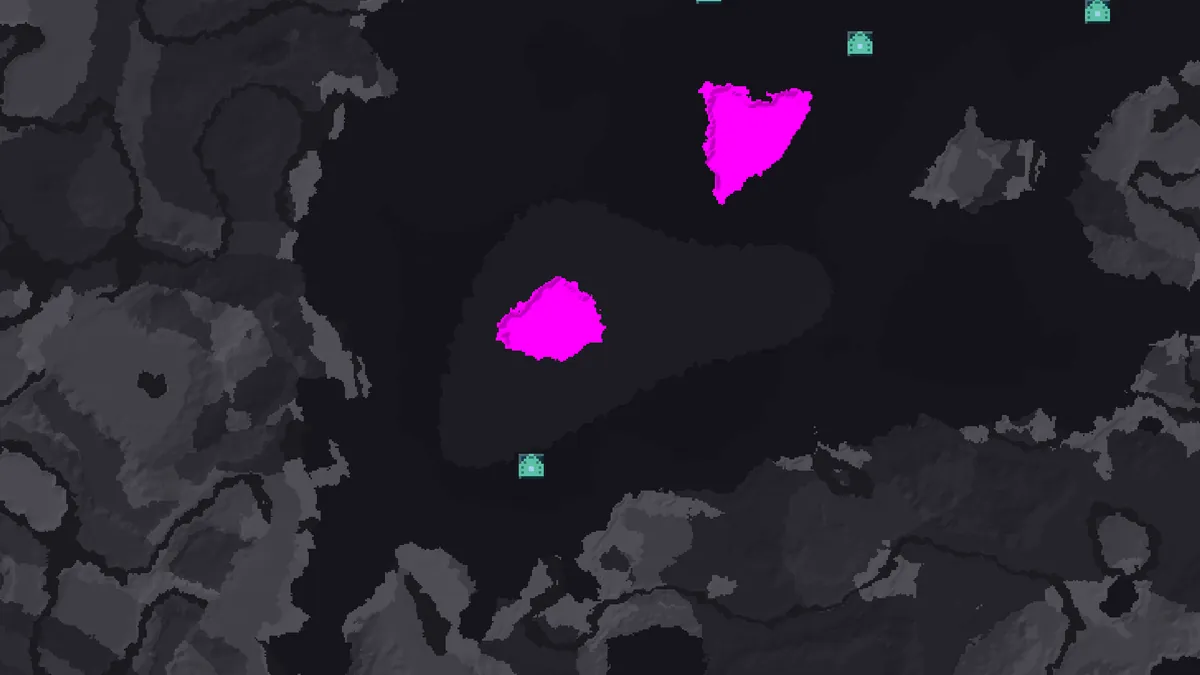
A mycelium island is also the classic site for a mob-proof base and for a guardian farm, since the deep ocean around it holds monuments: on seed 0 the nearest monument is at -1136, -240, in the same ocean as the mushroom fields at -968, -552.
Cherry groves, meadows and the mountain biomes
Cherry groves arrived in 1.20 and grow on the same mid-height mountain terrain as meadows, next to groves and snowy slopes. They give pink petals, cherry wood and a view, and the mountains around them hold emeralds, iron at height and, underneath, the deep dark. Seed 123456789 has one about 312 blocks from spawn around 56, 264, close enough for a first base.
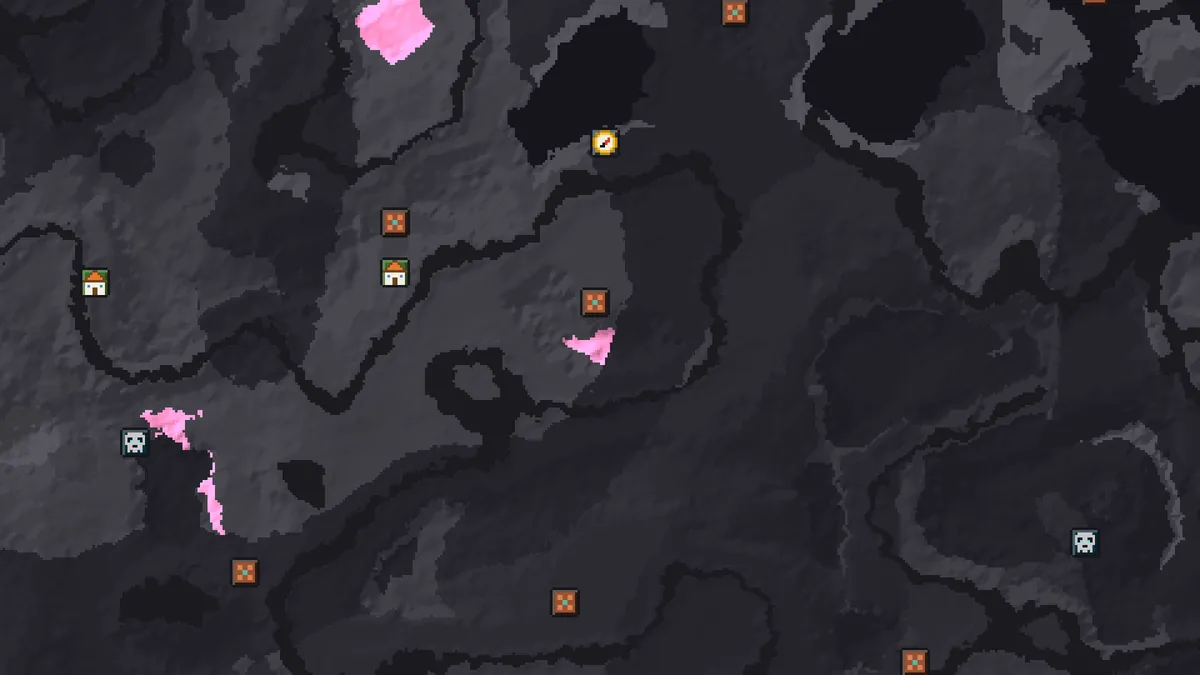
Frozen peaks, jagged peaks and stony peaks are the tops of the same mountains and show up in the same places; if you want a mountain base with a cherry grove below it, highlight the grove first and read the peak biomes around it on the map. Meadows, besides being pretty, are one of the six village biomes.
Pale gardens and dark forests
The pale garden, added in 1.21.4, is the grey relative of the dark forest, with pale oak trees, hanging moss, eyeblossoms and the creaking that only moves when you look away. It shares the dark forest's climate and is rarer, so it usually borders a dark forest. Both can host woodland mansions, which is the other reason to look for them; the mansion guide explains how the mansion grid and these biomes interact.
In a world created before 1.21.4, pale gardens only appear in chunks generated after the update. Set the finder's version to the one your new chunks use and the highlight shows where they will be.
Ice spikes, jungles, badlands and the deep dark
- Ice spikes are the weirdness variant of snowy plains: towers of packed ice on snow. Packed ice is the point, for ice roads and builds. They sit inside larger snowy areas, so look for them where the map is white; seed chunkscout, which spawns in a snowy taiga, has them 1,370 blocks out.
- Jungles and bamboo jungles are hot and humid: parrots, pandas, ocelots, melons, cocoa and jungle temples. Seed -1234567890123 has a jungle within 220 blocks of spawn and a bamboo jungle within 400.
- Badlands are hot and dry with terracotta cliffs, mineshafts on the surface and far more gold than anywhere else. Eroded badlands are the variant with hoodoo spires. Both are far on four of the five seeds here, which is normal.
- Deep dark is a cave biome, so it does not appear on the surface biome map. Switch the map's Biome layer from Surface to Deep (Y -51) and the sculk regions under the mountains appear, with the ancient cities inside them; the Caves (Y 0) layer does the same for lush and dripstone caves. Seed 8675309123456789 has deep dark under spawn within 200 blocks.
Searching seeds for a biome
If the biome you want is thousands of blocks away on your seed, the seed finder accepts biome conditions such as a mushroom field within 500 blocks of spawn or a cherry grove at spawn, and tests seeds until it has matches. Biome conditions are the cheapest to test, since no structures need checking, so they return quickly even for rare biomes. Combine one biome with one structure and you still get results in reasonable time; stack three rare biomes and you will wait.
Because the Overworld biome map is shared, a seed found for Java works for a Bedrock player who wants the same biome, as long as the version band matches; only the structures differ.
Questions
Why are mushroom islands so far away?
They need the lowest continentalness value, which only occurs in deep ocean far from other land. On the test seeds the nearest is 1,000 to 3,600 blocks from spawn, and some seeds have none within 4,000.
Are biomes the same on Java and Bedrock?
In the Overworld from 1.18 on, yes: both editions use the same noise functions and the same seed, so a rare biome is in the same place on both. Structures inside it differ.
How do I find a biome in-game?
With cheats, /locate biome minecraft:cherry_grove on Java gives the nearest one. The biome finder gives the same answer without cheats and shows every patch, not just the nearest.
Why is the deep dark not on the biome map?
It is a cave biome, chosen by the depth value, so the Surface layer shows the mountain biomes above it. Switch the Biome layer to Deep (Y -51) to see the deep dark, or Caves (Y 0) for lush and dripstone caves.
Can I search for a seed with a specific biome at spawn?
Yes. The seed finder takes biome conditions such as a cherry grove within 300 blocks of spawn and returns matching seeds ranked by seed score.
Related guides
Finders and tools in this guide
- Biome FinderSearch for any biome, from cherry groves to mushroom fields and deep dark.
- Mushroom Island FinderRare mushroom fields out at sea: mooshrooms and no hostile mobs.
- Cherry Grove FinderThe pink 1.20 cherry grove biome highlighted on your seed's map.
- Pale Garden FinderThe grey 1.21.4 pale garden, home of the creaking and eyeblossoms.
- Woodland Mansion FinderTrack down the rare dark forest mansions and their totems.
- Ancient City FinderDeep dark cities with the warden, sculk and swift sneak books.
Written by the Minecraft Tools team from the same world-generation engine that runs the seed map. Coordinates quoted here were computed with it for the stated seed, edition and version, and the engine is tested against the real game.